Category: Crime Diary

  • 7 dead as Russia launches massive missile and drone strikes across Ukraine

    7 dead as Russia launches massive missile and drone strikes across Ukraine

    Lagos, Nigeria (NPA) — March 7, 2026 — At least seven people were killed and more than ten injured as Russia unleashed waves of ballistic missiles and drone swarms against cities across Ukraine overnight, Ukrainian officials said Saturday.

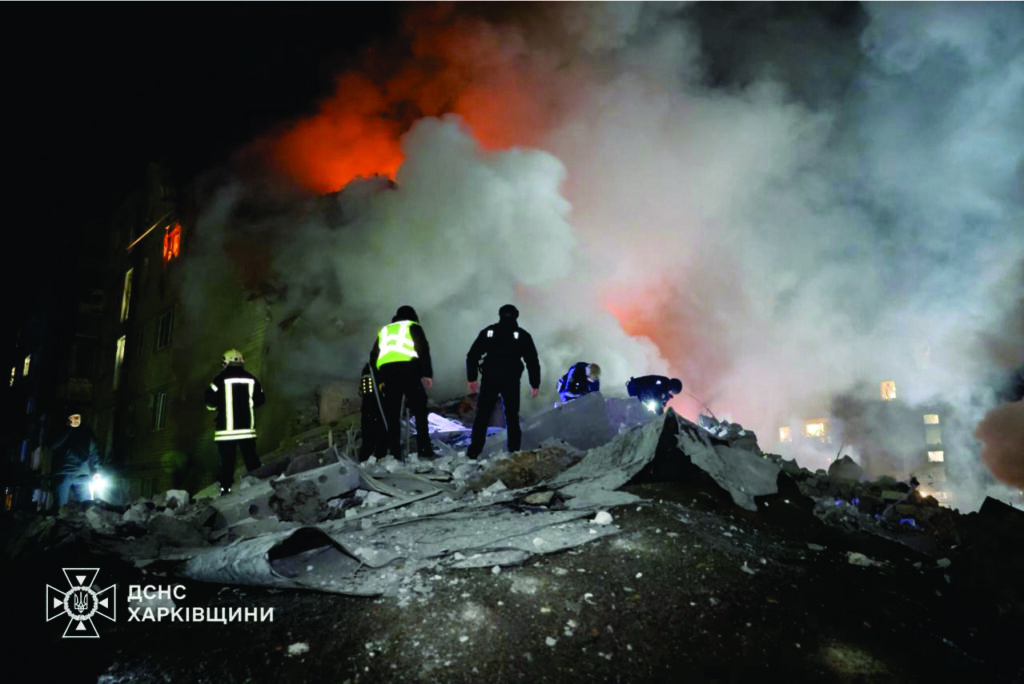
    The strikes hit multiple regions, including Kyiv, Khmelnytskyi, Chernivtsi, Zhytomyr, Dnipro, Zaporizhzhia, Vinnytsia, Odesa, Poltava, Sumy, and Cherkasy. In Kharkiv, a residential building was destroyed by a ballistic missile, leaving several people trapped under rubble. Rescue operations are ongoing.

    President Volodymyr Zelenskyy confirmed the casualties in a statement, noting that children were among the injured. “Unfortunately, as of now, 7 people have been killed. More than 10 have been injured, including children. People may still be trapped under the rubble. All necessary services are working at the scene,” he said.
    According to Zelenskyy, Russia launched 29 missiles — nearly half of them ballistic — and 480 drones, most of them Shahed models, targeting energy infrastructure in Kyiv, Khmelnytskyi, and Chernivtsi, as well as railway facilities in Zhytomyr. Damage was also reported across several other regions.

    The president urged Ukraine’s international partners to respond to what he described as “savage strikes against life.” He stressed that Russia has not abandoned its attempts to destroy Ukraine’s residential and critical infrastructure, calling for continued support from allies.

    Zelenskyy highlighted ongoing cooperation with the European Union and initiatives such as PURL, aimed at strengthening Ukraine’s defences. “We count on active work with the European Union to guarantee greater protection for our people. I am grateful to everyone who helps strengthen our protection,” he added.

  • U.S. lawmaker condemns Taraba church burning, says Washington will act

    U.S. lawmaker condemns Taraba church burning, says Washington will act

    Lagos, Nigeria (NPA) — March 6, 2026 — Riley Moore, a member of the United States Congress tasked by President Donald Trump to investigate the alleged persecution of Christians in Nigeria, has condemned the reported burning of St. Mary’s Catholic Cathedral in Wukari, Taraba State, on March 4, 2026.

    The attack, attributed to Islamist militants, drew widespread attention after images of the destroyed church circulated on social media. In a statement on March 6, Moore offered condolences to parishioners and cited scripture: “Blessed are they who are persecuted for the sake of righteousness, for theirs is the kingdom of heaven.”

    Moore stressed that Christians in Nigeria continue to face targeted violence, adding: “The United States has declared Nigeria a Country of Particular Concern, and we won’t stand idly by as Christians continue to face this violence.”

    Last week, the congressional committee chaired by Moore submitted recommendations to the U.S. President on measures to address what it described as systematic attacks on Christian communities in Africa’s most populous nation.

    According to the International Society for Civil Liberties and Rule of Law (Intersociety Nigeria), Islamist extremist groups in Nigeria—most notably Boko Haram and allied militants—have systematically targeted churches as part of a campaign to intimidate Christian communities, diminish their presence, and advance their goal of establishing a religiously homogenous state. Since 2009, an estimated 19,100 churches have been attacked, burned, or destroyed, averaging about 1,200 per year (roughly 100 per month).

    The primary driver behind these attacks is ideological motivation. Groups such as Boko Haram seek to impose a strict Islamist order, viewing Christian institutions as symbols of resistance to their ideology and as strategic targets for undermining community cohesion and morale.

    The Nigerian government has introduced several measures to address the violence, including military operations such as targeted airstrikes against Islamist extremist groups. However, analysts caution that these efforts remain insufficient, noting that the attacks have continued to escalate in both frequency and scale.

  • Father of former Ebonyi deputy governor murdered after abduction 

    Father of former Ebonyi deputy governor murdered after abduction 

    Abakaliki, Nigeria (NPA) — March 6, 2026 — His Royal Highness, Ezeogo Francis Igwe, father of former Ebonyi State Deputy Governor Kelechi Igwe and traditional ruler of Ndufu-Alike community in Ikwo Local Government Area, has been killed by kidnappers. The monarch was abducted on his way to church on Sunday, March 1, 2026. 

    Police confirmed that he was murdered by his abductors on the day, March 2, following confessional statements by suspects connected to the crime.

    In a statement issued Friday, the Ebonyi State Police Command said its operatives immediately launched a manhunt after the abduction was reported. According to the command’s spokesperson, DSP Joshua Ukandu, two suspects were arrested and confessed to the killing. They also offered to lead investigators to the gang’s hideout.

    Ukandu explained that as officers approached the location, they came under fire from other gang members. A shootout ensued, during which one suspect was killed while others escaped.

    Seven more suspects were later apprehended, bringing the total number of arrests to nine. A locally made pistol was recovered during the operation.

    The remains of the slain monarch have been recovered and placed in a morgue for autopsy. Police say investigations are ongoing, and the suspects in custody will face prosecution once inquiries are complete.

    Earlier, Newpost Africa reported that Ebonyi State Governor Francis Ogbonna Nwifuru strongly condemned the abduction, calling it “deeply troubling and totally unacceptable.” He emphasised that criminal attacks on innocent citizens—especially respected traditional leaders—will not be tolerated in the state. The governor also directed security agencies to intensify collaboration to track down the perpetrators and ensure they face justice.

  • Edo Police Command arrests 65 suspected kidnappers, recovers ransom money, others

    Edo Police Command arrests 65 suspected kidnappers, recovers ransom money, others

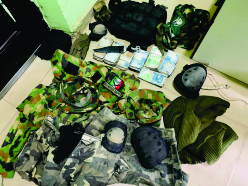
    Benin City, Nigeria (NPA) — March 6, 2026 — In a major breakthrough against kidnapping, the Edo State Police Command has arrested 65 suspected kidnappers and recovered ransom money along with military uniforms during a coordinated raid in the Aviele axis of the state.

    According to a statement issued on Friday by the Police Public Relations Officer, ASP Eno Ikoedem, the operation was carried out at about 2:45 a.m. on March 2, 2026, following credible intelligence reports.

    The statement explained that tactical teams from the State Headquarters, working in collaboration with operatives under Area Command Auchi and Area Command Ekpoma, stormed hideouts at Zango and Max Square Properties in Aviele after surveillance and technical analysis linked ransom negotiations to the area.

    “The operation led to the arrest of 65 suspected kidnappers and the recovery of exhibits, including the cash sum of ₦1,850,000 reasonably suspected to be ransom proceeds, as well as Nigerian Army uniforms, kits, and other incriminating items,” the Command said.

    ASP Ikoedem further noted that the suspects are currently undergoing discreet investigations to determine their level of involvement in kidnapping activities.

  • Botswana court hears landmark same-sex marriage case by LGBTQ+ rights groups

    Botswana court hears landmark same-sex marriage case by LGBTQ+ rights groups

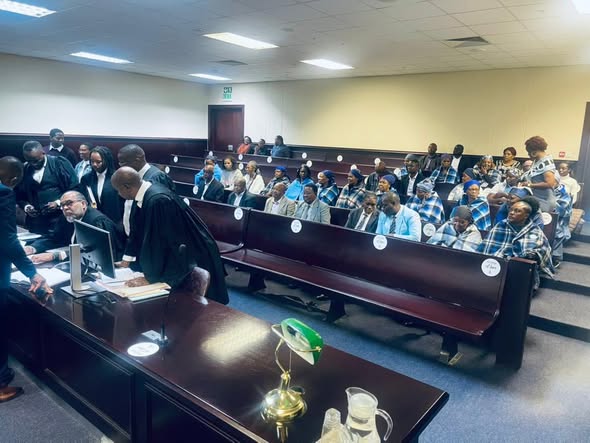
    Gaborone, Botswana (NPA) — March 6, 2026 — The High Court in Gaborone, Botswana, has begun hearing a landmark case challenging the legality of same-sex marriage under the country’s Marriage Act. The petition was filed by Bonolo Selelo and Tsholofelo Kumile, a same-sex couple seeking legal recognition of their union.

    The case, which could redefine Botswana’s stance on LGBTQ+ rights, comes amid growing calls from advocacy groups for broader recognition of same-sex unions following the 2019 decriminalisation of homosexuality. On Thursday, the court heard arguments questioning whether the Marriage Act’s definition of marriage as a union between a man and a woman violates constitutional protections of equality and dignity.

    The petitioners, supported by the Lesbians, Gays and Bisexuals of Botswana (LEGABIBO), argue that excluding same-sex couples from marriage is discriminatory and inconsistent with constitutional values. They contend that the 2019 ruling decriminalising same-sex relations laid the foundation for marriage equality.

    Government lawyers, however, maintain that the Marriage Act reflects Botswana’s cultural and social norms, insisting that any change should come through legislative reform rather than judicial intervention. The case has drawn significant public attention, with human rights organisations emphasising that recognition of same-sex marriage would strengthen Botswana’s reputation as a progressive democracy in Africa. 

    A ruling in favour of the petitioners could set a precedent for marriage equality in the region, while a rejection may reinforce existing legal barriers but intensify advocacy efforts both domestically and internationally.

  • Borno killings: Obi condemns Boko Haram/ISWAP attack, blames poor leadership

    Borno killings: Obi condemns Boko Haram/ISWAP attack, blames poor leadership

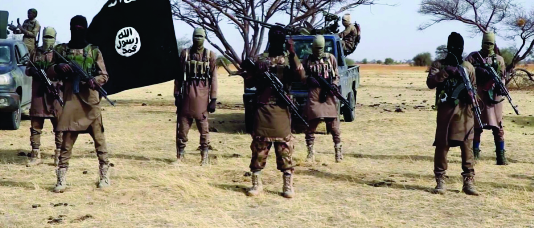
    Abuja, Nigeria (NPA) — March 6, 2026 — Peter Obi, a chieftain of the African Democratic Congress (ADC) and presidential aspirant, has condemned Thursday’s attack by Boko Haram insurgents on Ngoshe community in Borno State, northeast Nigeria.

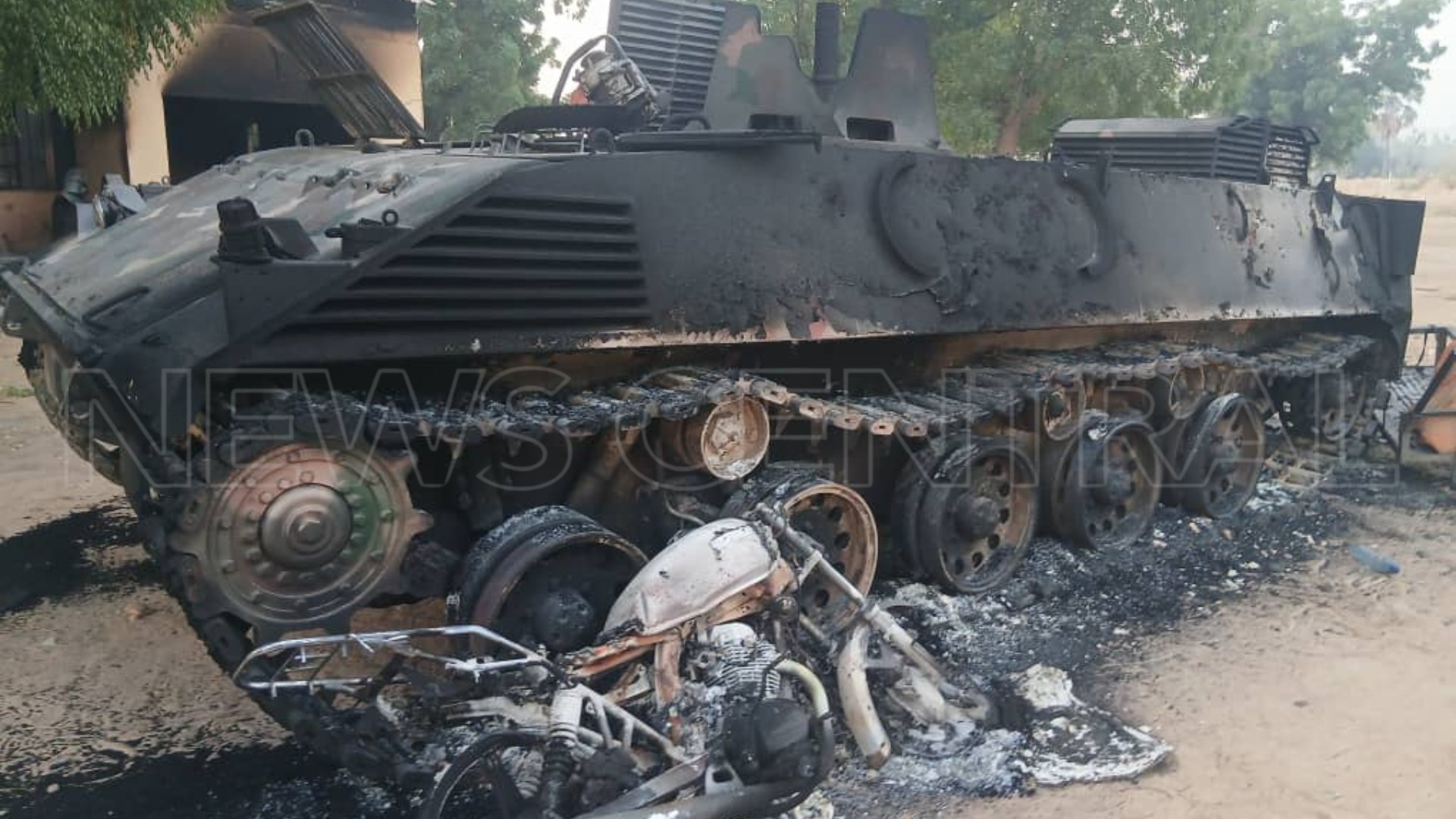
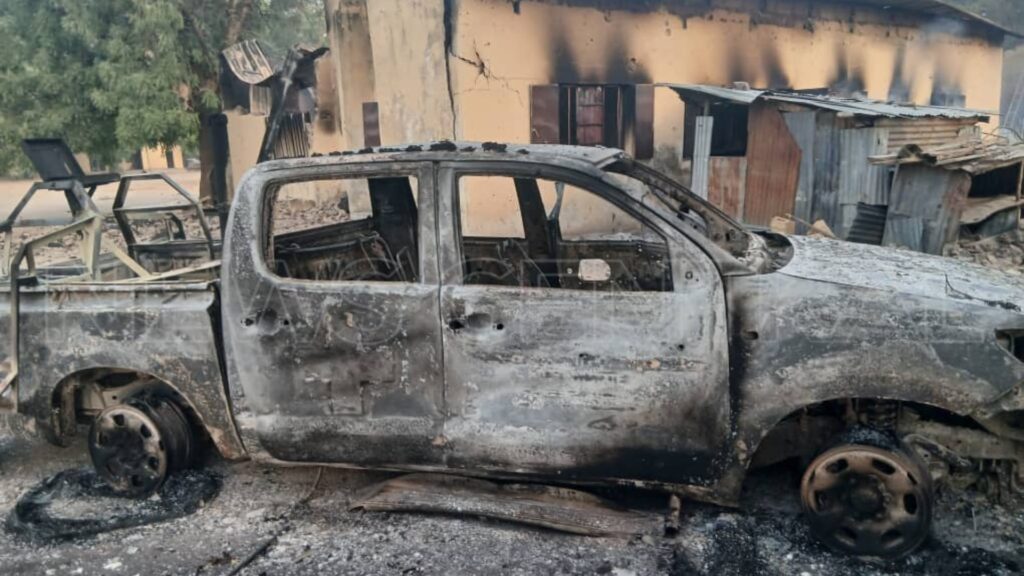
    The assault, which destroyed a military base and struck an internally displaced persons (IDP) camp, left at least nine Nigerian soldiers and several civilians dead, while an unspecified number of people were abducted, according to local reports.

    In a statement issued Friday, Obi expressed deep concern over the tragedy: “I watched several videos of this tragedy with deep horror. Once again, we are confronted with the painful reality of the daily suffering that far too many Nigerians are forced to endure. This is unacceptable.”

    He questioned the government’s response to ongoing insecurity: “How long will Nigerians continue to bear the consequences of poor leadership and mismanagement? How many more lives must be lost before decisive action is taken to secure our communities, protect the vulnerable, and dismantle the structures of these insurgents?”

    PHOTO: Buildings and military equipment set ablaze during the Boko Haram/ISWAP assault. Credit: News Central via Facebook.

    Obi criticised political leaders for prioritising electoral gains over national security, saying: “While Nigerians are slaughtered daily by terrorists, what is more troubling is that amid these killings, our political leaders are preoccupied with selfish schemings on how to steal, grab and run away with the next election cycle, keeping us in insecurity, poverty, and underdevelopment.”

    Offering condolences to victims, he added: “To the families who have lost loved ones, to the children now displaced, and to the communities living in fear, I stand with you in grief and in resolve. Your pain is Nigeria’s pain. Your safety and dignity must be the priority of any government that claims to serve the people.”

    Obi emphasised that Nigeria requires leadership that values human life above all else: “Our nation is stronger than the terror that threatens it. But we cannot remain silent, and we cannot accept inaction. We must act now—for today’s victims, for tomorrow’s children, and for the Nigeria we all deserve.”

  • FBI arrests Bangladeshi national in international child exploitation case

    FBI arrests Bangladeshi national in international child exploitation case

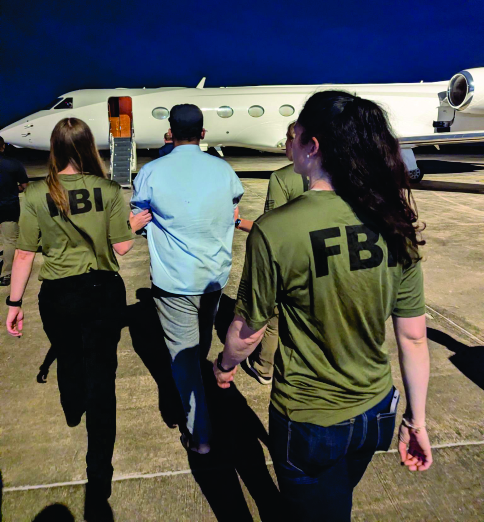
    Lagos, Nigeria (NPA) — March 6, 2026 — The United States Federal Bureau of Investigation (FBI) has announced the arrest of a 28-year-old Bangladeshi national, wanted since 2022 for allegedly operating an international child sexual exploitation enterprise.

    In a statement released Friday, FBI Director Kash Patel confirmed that the suspect, identified as Zobaidul Amin, was apprehended in Malaysia and subsequently transferred to the United States.

    “The FBI, working closely with our international partners, has arrested Zobaidul Amin, 28, a Bangladeshi national who has been wanted since 2022 on charges including running an international child sexual exploitation enterprise,” Patel said.

    According to the FBI, Amin was flown from Malaysia to Alaska on Thursday night, where he is expected to face formal charges later today.

    Director Patel expressed gratitude to both U.S. and international agencies for their cooperation in the operation.

    “We thank Legat Kuala Lumpur, the Government of Malaysia, and our local partners across the country for their invaluable assistance in this investigation and arrest. Special recognition goes to FBI Anchorage for their outstanding work in this case,” he added.

    Sex trafficking and child exploitation are treated as serious federal crimes in the United States. Convictions can carry penalties ranging from 15 years to life imprisonment, along with substantial fines and restitution to victims. In aggravated cases involving minors, offenders may face automatic life sentences.

  • Azerbaijan warns of retaliation after drone strike blamed on Iran

    Azerbaijan warns of retaliation after drone strike blamed on Iran

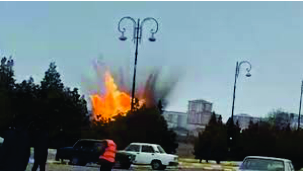
    Baku, Azerbaijan, March 5, 2026 (Agency Report) — Azerbaijan said Thursday it is preparing retaliatory measures after four Iranian drones allegedly crossed its border into the Nakhchivan exclave, injuring four people and striking civilian infrastructure. The incident has heightened fears that the Middle East war could spill further into the Caucasus.

    President Ilham Aliyev, addressing his Security Council, condemned the attack as “an unprovoked act of terror and aggression against Azerbaijan.” He ordered the armed forces to prepare a response, warning Tehran: “We are ready to demonstrate our strength against any hostile force — and they should not forget this in Iran.”

    Iran’s Deputy Foreign Minister Kazem Gharibabadi rejected the accusation, telling local media: “We do not attack our neighbouring countries.” Azerbaijani officials said investigations are underway to identify the drones, noting that one struck the terminal at Nakhchivan International Airport, another landed near a school, a third was shot down by the army, and a fourth damaged civilian infrastructure.

    The Foreign Ministry has demanded clarification from Tehran and lodged a formal protest with Iran’s ambassador. Officials warned that any threat to Azerbaijan’s energy infrastructure — a major supplier to Turkey and Europe via the Baku-Tbilisi-Ceyhan pipeline — could further drive up global oil prices already rattled by the U.S.–Iran war.

    Relations between Baku and Tehran have long been strained, with Azerbaijan deepening ties to Turkey and Israel. There is a growing fear that the conflict risks igniting violence between the neighbours, particularly given the presence of nearly 20 million ethnic Azerbaijanis inside Iran, the country’s largest minority group.

  • Nigeria Police Force Removes PRO Benjamin Hundeyin Amid Leadership Reshuffle

    Nigeria Police Force Removes PRO Benjamin Hundeyin Amid Leadership Reshuffle

    ABUJA, NIGERIA (NPA) — March 5, 2026 — The Nigeria Police Force has reportedly removed its Force Public Relations Officer, ACP Benjamin Hundeyin, following the appointment of Acting Inspector General of Police, Tunji Disu.

    Hundeyin, who assumed the role barely six months ago, was relieved of his duties as part of an ongoing restructuring ordered by President Bola Ahmed Tinubu. The official reason for his removal has not been disclosed, though sources suggest it is linked to the broader reorganisation within the force.

    A source quoted by The Whistler confirmed the development, stating: “The Force Public Relations Officer has been removed this morning. We don’t know who will take over from him, although we thought he would last longer, considering his expertise. However, when a new IGP is appointed, it is not unusual for some positions to be vacated. Unfortunately, he was affected.”

    President Tinubu formally decorated Disu as Acting Inspector General of Police on March 25, 2026, following the resignation of his predecessor, Kayode Egbetokun. During the ceremony, the President charged Disu to restore peace, strengthen security nationwide, and rebuild public trust in the police.Expressing confidence in the new appointee, Tinubu urged him to lead firmly but fairly, uphold professionalism, and prioritise the protection of lives and property. “It’s a daunting challenge. I know you can do it. You have my word, you have my full support,” Tinubu said.

  • Boko Haram Attacks Military Base in Borno, Killing Soldiers and Civilians

    Boko Haram Attacks Military Base in Borno, Killing Soldiers and Civilians

    Maiduguri, Nigeria (NPA) — March 5, 2026 — Suspected Boko Haram fighters launched a deadly assault on a Nigerian Army base in Ngoshe, Gwoza Local Government Area of Borno State in the early hours of Wednesday. The attack left several soldiers and civilians dead, with many others abducted.

    Eyewitnesses reported that the insurgents, armed with motorcycles and gun trucks, operated for hours. 

    ASP Nahum Daso, spokesperson for the Borno State Police Command, confirmed the incident, noting that while the military repelled the attackers, casualties remain unconfirmed. “An unknown number of civilians were killed, and some survivors were abducted toward the Mandara Mountains,” Daso said.

    Local sources indicated that at least nine soldiers were killed, while residents fled to Pulka town for safety. Witnesses added that women were among those abducted during the raid.

    Boko Haram, notorious for bombings, kidnappings, and massacres—including the 2014 Chibok schoolgirls’ abduction—continues to destabilise Nigeria’s northeast despite sustained military offensives.