Category: Business

  • 12 years after, MTN Nigeria suspends Xtratime service

    12 years after, MTN Nigeria suspends Xtratime service

    LAGOS, Nigeria — 17 April 2026 (NPA) — MTN Nigeria Communications Plc has announced the suspension of its Xtratime service, which previously allowed customers to borrow airtime or data with repayment automatically deducted from their next recharge. The company cited compliance with new government lending regulations as the reason for the stoppage of the service launched in 2014.

    In a statement issued Thursday and signed by Uto Ukpanah, FCIS, Company Secretary, MTN notified the Nigerian Exchange Limited and the investing public that the airtime and data credit advance service has been temporarily halted.

    The suspension, according to the statement, follows the implementation of the Digital, Electronic, Online or Non-Traditional Consumer Lending Regulations, 2025, which introduced stricter compliance and licensing requirements for providers of digital or non-traditional consumer credit services.

    MTN assured customers that, in the interim, they will continue to have access to alternative digital channels for airtime and data purchases.

    On the potential impact to its financial performance, the company stated that given the scale of the service within its overall revenue mix, it does not expect the temporary suspension to materially affect earnings or profitability.

    “We are closely monitoring customer behaviour and usage trends and will provide an update on any quantified impact in our Q1 2026 results,” the statement concluded.
  • Nigeria Seeks $2.3 trillion to close infrastructure gap, ICRC chief says

    Nigeria Seeks $2.3 trillion to close infrastructure gap, ICRC chief says

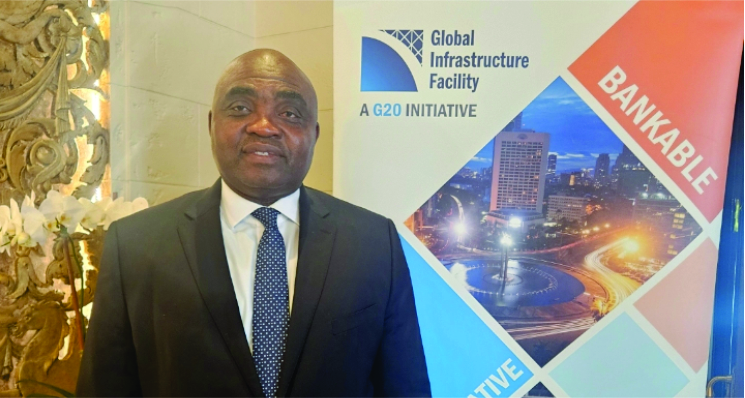
    ABUJA, Nigeria — April 17, 2026 (Agency Report) — Nigeria has intensified efforts to bridge an infrastructure deficit estimated at $2.3 trillion between 2020 and 2043, the Director-General of the Infrastructure Concession Regulatory Commission (ICRC), Jobson Ewalefoh, said on Thursday.

    Speaking on the sidelines of the Global Infrastructure Facility — a G20 initiative — during the Spring Meetings of the International Monetary Fund (IMF) and World Bank in Washington, Ewalefoh said Nigeria requires about $100 billion annually over 23 years to meet its infrastructure needs.

    He noted that government budgetary allocations remain insufficient to address the funding shortfall, making private sector participation through Public-Private Partnerships (PPPs) essential to nationwide infrastructure development.

    According to him, Nigeria’s Infrastructure Master Plan projects that 70% of funding will come from the private sector, underscoring the need to develop bankable project pipelines with support from institutions such as the Global Infrastructure Facility to attract international investors.

    Discussions at the forum highlighted the importance of tailoring PPP models to local realities, including investment risks, political considerations and the limited appetite for long-term capital in developing economies, Ewalefoh said.

    He added that Nigeria is positioning itself as an attractive investment destination, citing its population of about 250 million and ongoing government reforms aimed at improving the business climate and strengthening investor confidence.

    Ewalefoh assured potential investors of robust legal frameworks to safeguard investments, emphasizing the government’s commitment to the rule of law, contract enforcement and policies designed to guarantee returns while mitigating perceived risks.

    He identified the energy and transport sectors as priority areas, requiring an estimated $759 billion and $595 billion respectively. Other critical sectors in need of substantial investment include information and communications technology (ICT), agriculture, healthcare and education.

    PPPs, he said, offer practical solutions to funding constraints by reducing reliance on limited public budgets and enabling sustainable infrastructure financing through long-term investment recovery mechanisms for private investors.

    Ewalefoh expressed confidence that ongoing engagements with global investors and development partners would unlock capital flows, accelerate project delivery and help Nigeria achieve its infrastructure objectives.

    He also commended President Bola Tinubu for initiating reforms aimed at creating an enabling environment for PPPs to thrive. (NAN).

  • Guinness Nigeria reports N730.8 billion in sales over 18-month period

    Guinness Nigeria reports N730.8 billion in sales over 18-month period

    LAGOS, Nigeria — April 17, 2026 (Agency Report) — Guinness Nigeria Plc reported a 144% increase in sales to N730.8 billion for an 18-month financial period ending December 2025, following a change in its financial year-end.

    The company adjusted its reporting cycle from June to December, resulting in financial statements covering July 2024 through December 2025.

    Chairman Prof. Fabian Ajogwu disclosed the results at the company’s 75th Annual General Meeting in Lagos.

    Sales rose from N299.5 billion in the previous comparable period to N730.8 billion, driven by an optimized product mix, new product innovations and calibrated price adjustments aimed at mitigating inflationary and cost pressures, Ajogwu said.

    All product categories recorded resilient performance during the period, with Ready-to-Drink beverages delivering particularly strong growth.

    Gross profit increased by 152%, reflecting improved cost management and pricing strategies, while operating profit rose by 251%, supported by tighter cost controls and more efficient marketing investments.

    The company posted a net profit of N41.16 billion for the 18-month period, reversing a loss of N54.77 billion recorded in the 12 months to June 2024.

    Operating profit climbed to N89.27 billion from N25.41 billion a year earlier, while profit before tax stood at N68.39 billion, compared with a pre-tax loss of N73.68 billion in the previous period.

    After accounting for an income tax expense of N27.23 billion, net profit totaled N41.16 billion. Total comprehensive income also improved to N41.16 billion, compared with a comprehensive loss of N54.77 billion in the prior year.

    Shareholders at the meeting approved the appointment of Mayank Kabra as Executive Director, alongside Bola Adesola and Olusola Oworu as Non-Executive Directors.

    In separate remarks, shareholder representatives commended the company’s governance structure and performance.

    Adetutu Shiyanbola, chairperson of the Highly Favoured Shareholders Association of Nigeria, praised the company for maintaining gender balance on its board.

    Sunny Nwosu, national coordinator of the Independent Shareholders Association of Nigeria, urged the company to strengthen support for elderly shareholders beyond dividend payments.

    Capital market analyst Nornah Awoh advised the company to consider adopting both interim and final dividend payments to enhance shareholder value, while exploring export opportunities to diversify revenue streams.

  • AfCFTA: CBW Africa advocates greater participation of women

    AfCFTA: CBW Africa advocates greater participation of women

    LAGOS, Nigeria — 17 April 2026 (Agency Report) — The Commonwealth Business Women Africa (CBW Africa) has urged more women across the continent to take deliberate steps to leverage opportunities under the African Continental Free Trade Area (AfCFTA).

    Mrs Ngozi Oyewole, Continental President of CBW Africa, said in a communiqué on Thursday that women must play a central role in driving the AfCFTA vision.

    The News Agency of Nigeria (NAN) reports that AfCFTA, established in 2018, seeks to accelerate intra-African trade, creating the world’s largest free trade area by participation and strengthening Africa’s global trade position.

    Oyewole described AfCFTA as a transformative platform for economic integration, noting that Africa had moved beyond preparation into the active implementation of a unified market.

    She added that the initiative was designed to unlock intra-African trade, eliminate barriers, and create one of the largest single markets globally.

    According to her, women must play a central role in driving this vision rather than remaining on the sidelines.

    “This is a continental awakening, and Africa is no longer preparing for integration; we are already in it,” she said.

    Oyewole noted that CBW Africa was actively contributing to this integration through its e-commerce platform, which connects women entrepreneurs across borders.

    She said the platform enhances market access, promotes visibility, and facilitates trade transactions among women-led businesses across African countries.

    “We are not just speaking about integration; we are living it.

    “We are moving women from informality to structured enterprises, from local markets to continental value chains, and from potential to profitability,” she said.

    She added that the organisation was focused on building bankable and investable businesses led by women, as well as fostering credible and well-governed networks.

    Oyewole also emphasised the importance of physical networking, describing proximity as a critical factor in unlocking business opportunities under the AfCFTA framework.

    She encouraged participants to engage actively, initiate partnerships, and develop clear action plans that translate into business growth and cross-border partnerships.

    She called on African women to move beyond participation in AfCFTA to actively dominate trade and enterprise across the continent.

    “No woman should be without a concrete plan — not just inspiration, but a clear strategy for execution and collaboration,” she said. (NAN).

  • Nigeria’s inflation climbs to 15.38% in March, food and rural areas hit hardest

    Nigeria’s inflation climbs to 15.38% in March, food and rural areas hit hardest

    LAGOS, Nigeria — 16 April 2026 (NPA) — Nigeria’s inflation rose again in March 2026, according to the National Bureau of Statistics. Prices of everyday goods and services went up by 15.38% compared to last year, slightly higher than the 15.06% recorded in February. This means that, on average, Nigerians are paying more for the same items than they did a year ago.

    The Consumer Price Index, which tracks changes in the cost of living, climbed to 135.4 points in March, up from 130.0 in February. Monthly, inflation jumped to 4.18%, showing that prices rose faster in March than they did in February.

    Food remains the biggest driver of inflation. Items like yams, cassava, ginger, groundnuts, potatoes, tomatoes, and cassava flour saw noticeable price increases. Restaurants, transport, housing, and healthcare also added to the pressure.

    Urban areas recorded inflation of 14.64%, while rural areas were hit harder at 17.22%, showing that people living outside cities are feeling the pinch more severely.

    Across the states, Bayelsa, Sokoto, and Bauchi had the highest inflation rates, while Osun, Kano, and Kaduna experienced the lowest. For food prices specifically, Bayelsa, Sokoto, and Adamawa saw the sharpest increases, while Kano, Oyo, and Katsina had the smallest rises.

    In simple terms, while inflation has slowed compared to last year’s very high levels, prices are still climbing quickly, especially for food and in rural communities. This means households continue to struggle with higher living costs.

  • Okpebholo rebuilds Ekpoma POWA Market, disburses ₦200m to fire-affected traders

    Okpebholo rebuilds Ekpoma POWA Market, disburses ₦200m to fire-affected traders

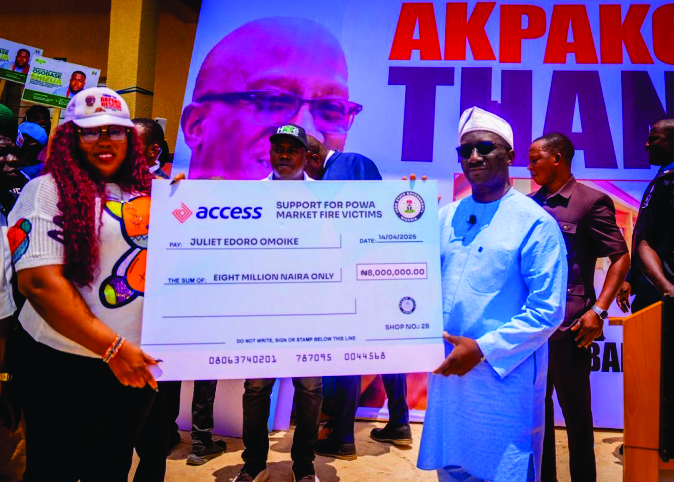
    BENIN CITY, Nigeria — 14 April 2026 (NPA) — The Edo State Governor, Senator Monday Okpebholo, on Tuesday presented cheques of ₦8 million each, totalling ₦200 million, to traders affected by the recent fire that gutted the POWA Market in the Ekpoma axis of the state.

    The governor also announced that the market had been rebuilt, bringing relief to the affected traders and giving them a fresh start after the tragedy and losses they suffered in the inferno.

    Okpebholo said, “A few days ago, I made a promise to the traders affected by the POWA Market fire in Ekpoma. Today, I have fulfilled that promise.”

    “We have rebuilt the market, and I personally presented the cheques to each of the affected traders as we disbursed ₦200 million in support, with every shop owner receiving ₦8 million to help them restart their businesses.”

    The governor explained that the intervention was driven by his understanding of the pain and disruption the fire caused, stressing that his administration’s priority is restoring not just livelihoods, but hope and dignity. “This is what governance means to me: standing with our people and taking real action when it matters most,” he said.

    He reiterated his administration’s commitment to always stand by the people and ensure their welfare is met. “We will continue to do more to support our people and put smiles on the faces of Edo families. A New Edo has risen,” the statement concluded.

  • Afreximbank backs Dangote Group’s $100 billion revenue target by 2030

    Afreximbank backs Dangote Group’s $100 billion revenue target by 2030

    CAIRO, Egypt — 14 April 2026 (NPA) — The African Export-Import Bank (Afreximbank) has pledged support for Dangote Group as the conglomerate pursues an ambitious plan to expand operations and achieve annual revenues of US$100 billion by 2030.

    The announcement followed the presentation of the Group’s long-term growth strategy, “Vision 2030: Supercharging Dangote Group for Long-Term Success,” to Afreximbank’s Board of Directors and executive team on 31 March 2026. The strategy outlines a two-phase expansion programme spanning 2025–2028 and 2028–2030.

    Key initiatives include increasing the capacity of the Dangote Petroleum Refinery from 650,000 barrels per day to 1.4 million barrels per day, and quadrupling fertiliser production from 3 million tonnes per annum to 12 million tonnes per annum — positioning the Group as the world’s largest producer of urea fertiliser. The plan also covers expansion in cement, rice, and food production, alongside new investments in infrastructure, gas, mining, data centres, and power.

    Dangote Group estimates it will require at least US$40 billion in new investments over the next five years to realise its continental ambitions.

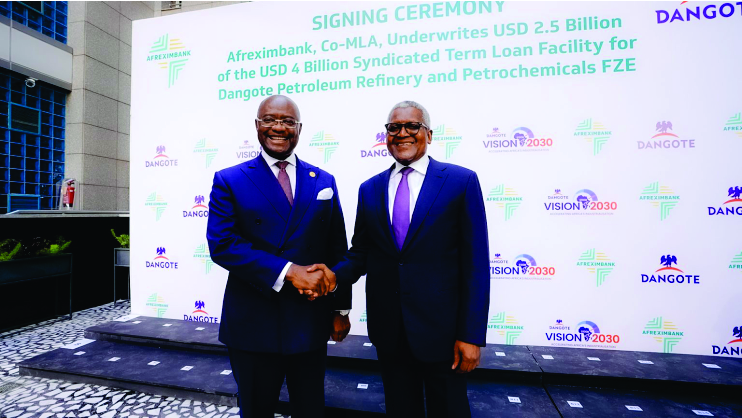
    Aliko Dangote, President and Chief Executive of Dangote Industries Limited, described the partnership as a shared mission to drive Africa’s industrial growth. “Our partnership with Afreximbank is more than financial support; it is about a shared dream for the continent,” he said.

    Afreximbank President and Chairman of the Board, Dr. George Elombi, emphasised the alignment of goals between the two institutions, noting that the collaboration would accelerate Africa’s industrial transformation. He recalled the continent’s struggles during the COVID-19 pandemic due to limited production capacity, stressing the importance of building local resilience.

    As part of the partnership, Afreximbank signed a US$2.5 billion facility underwritten as part of a US$4 billion syndicated term loan in favour of Dangote Petroleum Refinery and Petrochemicals FZE.

    The agreement underscores Afreximbank’s commitment to supporting large-scale African enterprises and Dangote Group’s role in advancing industrialisation and economic diversification across the continent.

  • 10,000 fashion producers to gather in Aba for ‘The Fashion Games 2026’

    10,000 fashion producers to gather in Aba for ‘The Fashion Games 2026’

    ABA, Nigeria — 14 April 2026 (Agency Report) — No fewer than 10,000 fashion producers are expected to converge on Aba, Abia State, for the second edition of The Fashion Games 2026 (TFG 2026), organisers announced on Monday.

    The event, organised by Ethnocentrique Limited, will also attract fashion enthusiasts, policymakers, and buyers. Chief Executive Officer Irunna Ejibe said the 2026 edition, themed “AHIA 360,” aims to showcase a holistic fashion market experience and promote the development of a structured fashion economy in Aba and across Nigeria.

    Scheduled for April 28–29, the two-day programme will feature an industry-focused session for buyers, policymakers, and MSMEs on the first day, followed by a large public showcase at Enyimba International Stadium on the second day.

    Ejibe recalled that the maiden edition in 2025 drew 4,500 participants and engaged 1,400 MSMEs, while 2,000 trainees graduated under the Fashion Future Programme (FFP), implemented in partnership with the Mastercard Foundation. She noted that Aba remains a major hub for garment, footwear, and accessory production, though many artisans lack access to finance, certification, and markets.

    Chief Operating Officer Jeremiah Ubunamah added that Aba’s fashion cluster has the potential to grow into a $3 billion industry within five to ten years if supported with adequate infrastructure. He said the event would help address gaps in finance, intellectual property protection, and market linkages.

    The first day will include deal-making sessions with buyers, retailers, government officials, and industry experts, culminating in business partnership signings. The second day will feature cluster parade competitions involving 25 production groups, runway presentations for emerging designers, and the graduation of new FFP participants.

    Organisers say the initiative underscores Aba’s role as a fashion powerhouse and highlights opportunities for Nigeria’s creative economy.

  • United Nations launches Borrowers’ Platform on April 15

    United Nations launches Borrowers’ Platform on April 15

    INTERNATIONAL —13 April 2026 (NPA) — The United Nations has officially launched the Borrowers’ Platform, a new initiative designed to give developing countries a stronger collective voice in global debt discussions. Facilitated by the UN Conference on Trade and Development (UNCTAD), the platform seeks to address long-standing gaps in the international financial system by creating a borrower-led space for cooperation, knowledge-sharing, and capacity-building.

    Debt servicing costs in developing countries have surged over the past decade, with external debt reaching $11.7 trillion in 2024. That year, governments spent nearly 10% of their revenue on interest payments, while least developed countries devoted almost a quarter of their revenue to external creditors. According to UNCTAD, 54 countries—home to 3.4 billion people—now spend more on debt than on health or education.

    Rebeca Grynspan, Secretary-General of UNCTAD, underscored the urgency of reform: “3.4 billion people deserve better outcomes. They’re not asking for charity. They want a level playing field where finance enables development rather than constraining it.”

    Egypt’s Finance Minister Ahmed Kouchouk, who chairs the initial working group, explained that the Borrowers’ Platform is not a debt restructuring forum but rather a cooperative space to share experiences, strengthen debt management capacity, improve transparency, and engage more effectively in global financial discussions.

    The platform’s creation follows a series of milestones: in December 2024, UN Secretary-General António Guterres appointed an Expert Group on Debt; in June 2025, the group proposed the Borrowers’ Platform; in July 2025, Member States endorsed the idea in the Sevilla Commitment at the 4th International Conference on Financing for Development; and in October 2025, the Geneva Consensus at UNCTAD16 called on UNCTAD to facilitate borrower cooperation. A working group led by Egypt and Pakistan, with members including Colombia, Honduras, Maldives, Nepal, and Zambia, drafted the platform’s modalities.

    UNCTAD will serve as the platform’s secretariat, providing technical and administrative support. Advocates say the initiative sends a positive signal to markets by promoting debt sustainability and transparency, while giving developing countries a long-overdue seat at the table in shaping global financial rules.

  • Femi Otedola’s MAKING IT BIG wins Gold at Axiom Business Book Awards  

    Femi Otedola’s MAKING IT BIG wins Gold at Axiom Business Book Awards  

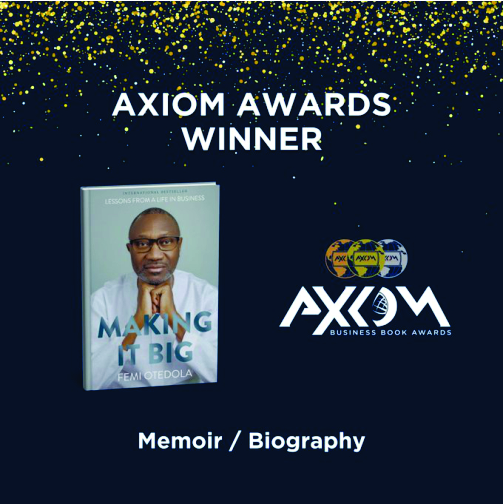
    LAGOS, Nigeria, 13 April 2026 (NPA) — Entrepreneur and philanthropist Femi Otedola, Chairman of FirstHoldCo Plc, has announced that his recently published book, Making It Big: Lessons from a Life in Business, has won the Business Book Gold Award at the 2026 Axiom Business Book Awards, widely regarded as the world’s most respected business book honors since 2007.  

    Otedola described the recognition as a personal milestone and a testament to the exceptional team that helped bring the book to life. He extended appreciation to readers who have supported the work, noting that the book is both a memoir and a business guide.  

    Making It Big chronicles Otedola’s rise from childhood dreams of entrepreneurship to becoming one of Africa’s most prominent billionaires and philanthropists. It highlights his journey of ambition, resilience, and reinvention — from making his first billion at 41, to losing a fortune, and rebuilding his empire.  

    Through personal stories, Otedola shares insights into leadership, risk-taking, and the importance of maintaining a positive mindset despite challenges. Part memoir and part business manual, the book offers lessons on perseverance, strategic thinking, and philanthropy.  

    Otedola emphasizes that success is not linear but achievable through determination and adaptability. The book serves as inspiration for aspiring entrepreneurs, showing that it is possible to defy the odds and create lasting impact in business and society.