Category: Markets & Finance

  • Bank of Canada raises key interest rate to 2.50% amid persistent inflation

    Bank of Canada raises key interest rate to 2.50% amid persistent inflation

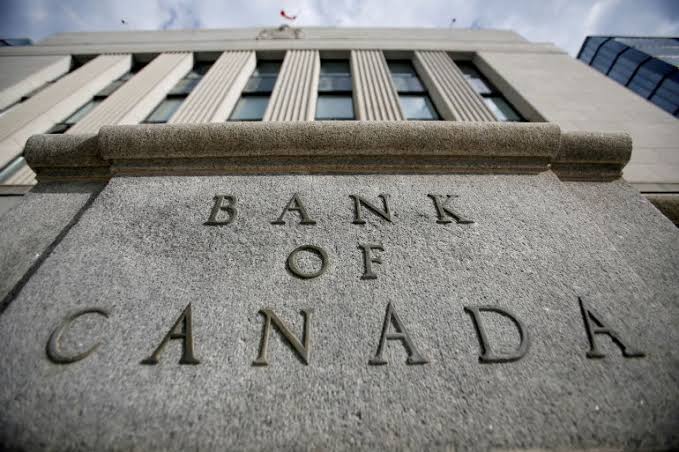
    OTTAWA, Canada (Agency Report) — The Bank of Canada has raised its benchmark overnight interest rate by 25 basis points to 2.50 per cent, citing persistent inflationary pressures driven by elevated energy prices and uncertainty surrounding the global economic outlook.

    In a statement issued on Wednesday, October 28, 2026, the central bank said the Bank Rate had been increased to 2.75 per cent, while the deposit rate rose to 2.45 per cent.

    The bank said global economic activity had remained resilient since its July Monetary Policy Report, despite higher energy prices. It noted that the United States continued to record robust growth, supported by consumer spending and investment related to artificial intelligence, while economic activity in the euro area remained resilient and broad-based.

    China’s economic growth also rebounded in the third quarter, driven by stronger exports and increased government spending.

    However, persistently high oil prices and refinery margins had contributed to rising inflation in several countries.

    The bank revised its global economic growth forecast slightly upwards to 3.1 per cent for 2026, while retaining its projections of 3.2 per cent for both 2027 and 2028.

    It also reported tighter global financial conditions since July, with higher government bond yields in advanced economies and volatility in equity and credit markets amid uncertainty over the artificial intelligence sector.

    The Canadian dollar, which had weakened against the US dollar, recovered to approximately 71 US cents, in line with the assumption in the bank’s July report.

    Canadian economy records stronger growth

    The Bank of Canada said economic growth had picked up in the middle of the year, with gross domestic product expanding by 3.3 per cent in the second quarter. Recent indicators suggested growth of about 2 per cent in the third quarter, exceeding the bank’s July projections.

    Consumer spending remained solid despite slow population growth, while business investment rebounded, supported by activity in the oil and gas sector and spending on machinery and equipment.

    Although sectors affected by US tariffs continued to face weakness, overall exports strengthened on the back of robust US demand, increased energy production and signs that Canadian businesses were adapting to changing trade conditions.

    The unemployment rate had remained around 6.5 per cent for several months, while a broad range of indicators continued to point to some excess supply in the economy.

    The bank expects new US tariffs to slow economic growth in Canada in the fourth quarter of 2026 before a recovery in 2027, supported by business investment, exports and fiscal measures. It also expects consumption growth to moderate and the housing market to remain relatively weak.

    Canada’s economy is projected to grow by 1 per cent in 2026 and 2 per cent annually in 2027 and 2028, representing a somewhat stronger overall outlook than the July forecast.

    However, the bank warned that considerable uncertainty remained, particularly regarding trade relations between Canada and the United States.

    Inflation concerns drive rate increase

    The central bank said consumer price index inflation had remained around 3 per cent since April and was expected to rise to approximately 3.5 per cent by the end of the year.

    Excluding gasoline, inflation stood at 2.2 per cent in September, while measures of core inflation remained close to the bank’s 2 per cent target.

    The bank warned that higher fuel prices were increasing production and transportation costs, while imported industrial and electronic input prices had also risen.

    Although businesses had largely absorbed higher input costs so far, the bank’s surveys suggested that more companies would pass those costs on to consumers over the coming year.

    Near-term inflation expectations among households and businesses had increased, although longer-term expectations remained well anchored.

    The bank also highlighted the ongoing conflict in the Middle East, which it said had entered its eighth month without a clear path to resolution. It warned that prolonged high energy prices and the pass-through of rising costs could make inflation more persistent.

    It projected inflation to average 3 per cent in 2027, one percentage point above its July forecast, before returning to 2 per cent by the middle of 2028.

    Developments in the Middle East and how businesses respond to mounting cost pressures were identified as the main sources of uncertainty surrounding the inflation outlook.

    Further rate increases remain possible

    The Bank of Canada said its decision to raise the policy rate was intended to reduce the risk that persistently high energy prices would spread more broadly to the prices of other goods and services.

    It cautioned that further rate increases might be necessary but said the Governing Council had agreed to proceed carefully given the uncertainties surrounding the economic outlook.

    The bank reaffirmed its commitment to maintaining Canadians’ confidence in price stability as it seeks to contain inflation while supporting sustainable economic growth.

  • Nvidia approves record $150bn share buyback as AI competition pressures stock

    Nvidia approves record $150bn share buyback as AI competition pressures stock

    SAN FRANCISCO, United States (NPA) — Nvidia has authorised an additional $150 billion for share buybacks, its largest-ever repurchase approval, as the artificial intelligence chipmaker seeks to support shareholder value amid intensifying competition and concerns over the sustainability of the AI spending boom.

    The latest authorisation takes Nvidia’s available share repurchase capacity to $235 billion, which the company expects to deploy through fiscal 2028.

    The move surpasses Apple’s $110 billion share buyback authorisation in 2024, making Nvidia’s latest programme the largest such approval by a US company.

    Nvidia shares rose more than 2% following the announcement.

    Despite its dominance of the AI-chip market, Nvidia’s shares have gained just over 20% this year through Friday, broadly matching the Nasdaq 100 but significantly trailing rivals Advanced Micro Devices and Intel.

    AMD’s shares have more than doubled over the period, while Intel has gained more than threefold.

    Investors question AI spending boom

    The buyback comes as investors increasingly scrutinise the enormous capital spending by technology companies on artificial intelligence infrastructure.

    Nvidia has been one of the biggest beneficiaries of the AI investment cycle, with demand for its high-performance processors generating substantial revenue and cash.

    However, concerns have grown over whether technology companies can maintain their current pace of spending on AI infrastructure and whether the resulting returns will justify the investment.

    Analysts said Nvidia’s decision to return more capital to shareholders reflects confidence in the durability of demand while acknowledging that the current pace of AI infrastructure expansion may not continue indefinitely.

    “The AI buildout won’t continue at its current pace forever, but Nvidia is signalling confidence that demand for its hardware and services has staying power,” said Jacob Bourne, an analyst at Emarketer.

    He said Nvidia’s strong cash generation currently gives it room to continue investing heavily in its business while also returning capital to shareholders.

    Valuation comes under pressure

    Nvidia was trading at about 16.5 times its 12-month forward earnings, according to LSEG data, its lowest forward earnings multiple since January 2015 and well below its 15-year average of about 30.

    The decline in the valuation multiple reflects growing expectations that the company’s exceptional profit growth could moderate as competition in AI chips intensifies and customers reassess the scale of their infrastructure investments.

    Ben Barringer, head of technology research at Quilter Cheviot, said Nvidia’s buyback strategy resembles Apple’s use of share repurchases to support its stock during periods when growth slows and valuation multiples come under pressure.

    Nvidia has nonetheless maintained an aggressive growth outlook.

    Last month, the company forecast about 70% revenue growth for fiscal 2028, providing investors with further confidence that demand for AI computing infrastructure could remain strong despite questions about the longevity of the current spending cycle.

    Massive capital return

    The scale of Nvidia’s latest buyback authorisation underscores the extraordinary cash generation produced by the AI boom.

    The additional $150 billion is larger than the market value of roughly 84% of companies in the S&P 500, according to LSEG data.

    Nvidia ended its July quarter with $22.44 billion in cash and cash equivalents. The company had previously announced an $80 billion share repurchase programme in May.

    Chief Executive Officer Jensen Huang said the company’s cash generation gives it the financial capacity to continue investing in technologies driving the AI transformation while also returning capital to shareholders.

    The latest buyback signals that Nvidia intends to use its substantial cash flows for two purposes simultaneously: funding the next generation of AI technology while increasing shareholder returns as competition and market expectations reshape the sector.

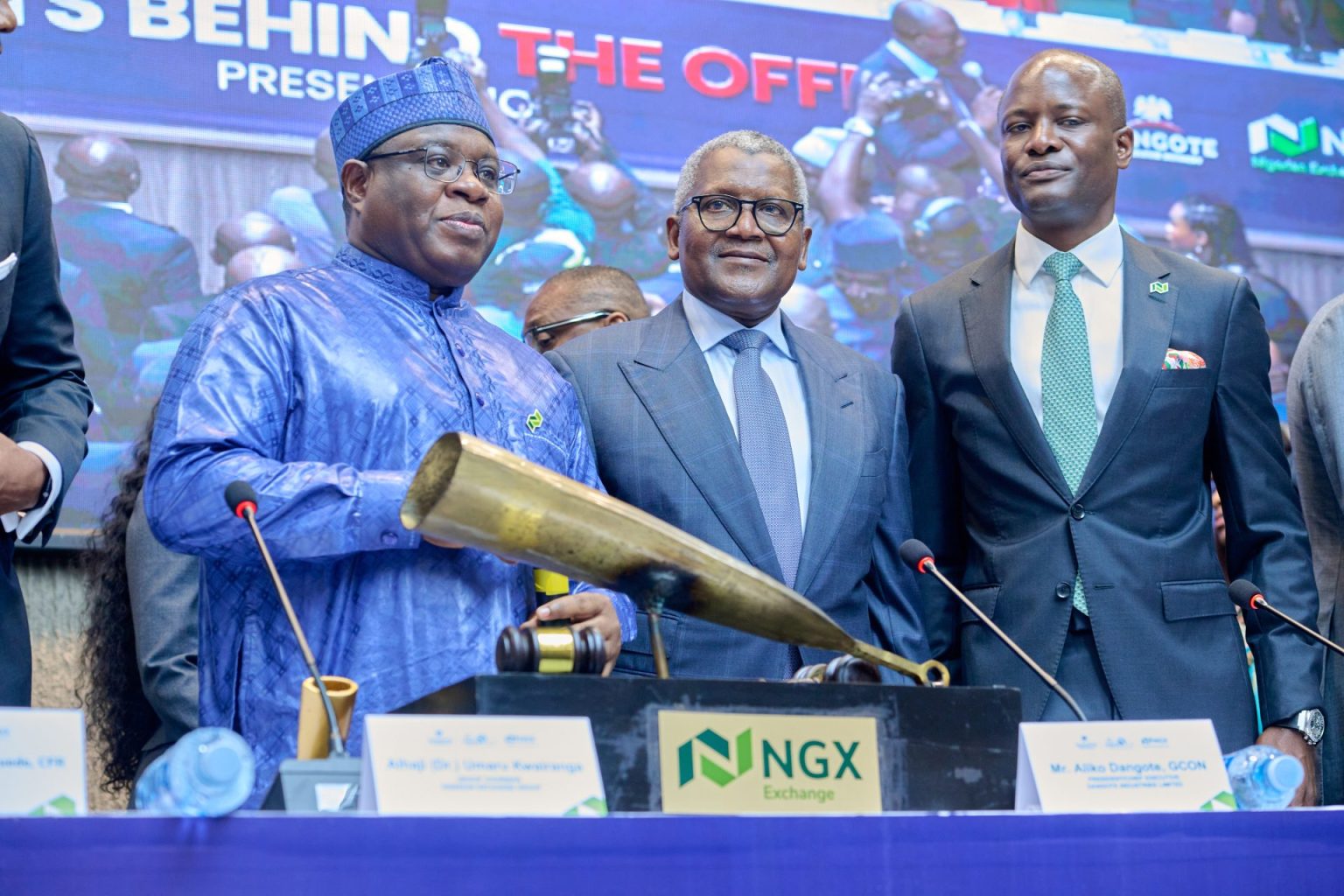
  • Dangote commends NGX leadership for transforming Nigeria’s capital market

    Dangote commends NGX leadership for transforming Nigeria’s capital market

    LAGOS, Nigeria (NPA) — President and Chief Executive Officer of Dangote Industries Limited, Aliko Dangote, has commended the leadership of Nigerian Exchange Group (NGX Group) for transforming Nigeria’s capital market and positioning the Exchange for greater participation.

    Dangote made the commendation on Monday at the Facts Behind the Offer presentation and Opening Gong ceremony for the Initial Public Offering (IPO) of Dangote Petroleum Refinery and Petrochemicals FZE, held at the Nigerian Exchange in Lagos.

    Reflecting on his tenure as President of the Exchange, Dangote recalled his efforts to mobilise stakeholders towards repositioning the institution as a world-class exchange.

    He credited NGX Group Chairman, Alhaji Umaru Kwairanga, and the Group Managing Director and Chief Executive Officer, Temi Popoola, with advancing that vision.

    “I must thank the Exchange, led by its Group Chairman, Kwairanga, who I think I must thank for not disappointing us. And we have the very capable Temi Popoola, a truly exceptional and level-headed leader,” Dangote said.

    He described Kwairanga and Popoola as “two great guys” behind what he called the transformation of the Exchange.

    “I never thought this exchange would be at this level in 2026,” he added.

    The Dangote Refinery IPO is expected to deepen the connection between a major Nigerian enterprise and the domestic capital market while creating an opportunity for broader ownership of the company.

    Marketed as an “IPO for the People”, the offer comprises 4.1 billion ordinary shares at N525 per share, with a minimum subscription of 10 shares valued at N5,250.

    The offer opened on September 14, 2026, and is scheduled to close on October 13, 2026. It is expected to raise approximately N2.15 trillion and is open to retail, institutional and eligible African investors.

    Speaking on the significance of the offer, Popoola said the refinery IPO represented an important development for Nigeria’s capital market beyond the size of the transaction.

    “The launch of the Dangote Petroleum Refinery IPO is an important moment for Nigeria’s capital market, not simply because of the scale of the transaction, but because of what it represents: a capital market where more Nigerians can participate in the value created by the country’s most important businesses,” he said.

    Popoola said NGX Group had spent the past three years developing infrastructure aimed at expanding access to investment opportunities.

    He said NGX Invest now connects the offer to more than 100 distribution channels covering stockbrokers, banks, fintechs and other financial institutions.

    “Through API-based connectivity, we are taking investment opportunities closer to the platforms and channels that people already use,” he said.

    According to him, the approach would help create what he described as an “ownership economy”, in which Nigerian businesses could access long-term capital while more Nigerians have opportunities to participate in their growth.

    “This is how we build an ownership economy: strong Nigerian businesses accessing long-term capital, and more Nigerians having the opportunity to participate in their growth,” Popoola said.

    He said NGX Group would continue to strengthen market infrastructure and investor access while supporting further large-scale capital raises in Nigeria and across the continent.

    “At NGX Group, we will continue strengthening market infrastructure and investor access as we support further large-scale capital raises across Nigeria and the continent,” he added.

  • NGX All-Share Index rises as equities gain; Linkage Assurance tops gainers

    NGX All-Share Index rises as equities gain; Linkage Assurance tops gainers

    LAGOS, Nigeria (NPA) — The Nigerian Exchange (NGX) recorded a marginal gain on Wednesday, with the benchmark All-Share Index (ASI) rising by 0.04 per cent to close at 244,912.24 points, as renewed investor interest in selected stocks lifted the equities market.

    The market performance also pushed the Equity Market Capitalisation higher to ₦158.33 trillion, according to the NGX Daily Market Snapshot released on Wednesday.

    Despite the positive performance in equities, the fixed income and Exchange Traded Products (ETPs) segments closed lower during the trading session.

    The Fixed Income Market Capitalisation declined by 0.05 per cent to ₦56.70 trillion, while the ETPs Market Capitalisation slipped by 0.16 per cent to ₦67.89 billion.

    Market activity showed investors maintaining cautious optimism, with buying interest concentrated in selected insurance and consumer goods stocks.

    Linkage Assurance Plc emerged as the day’s best-performing stock, appreciating by 9.94 per cent to close at ₦1.77 per share.

    It was followed by AVA Plc, which gained 9.55 per cent to settle at ₦10.90, while FGI Plc advanced 7.69 per cent to close at ₦2.80 per share.

    Also, among the top gainers were McNichols Plc, which appreciated by 7.34 per cent to ₦5.85, and Coronation Plc, which rose 5.51 per cent to close at ₦2.49 per share.

    According to market analysts, the modest appreciation in the equities market reflected renewed investor confidence in selected counters, particularly within the insurance and consumer goods sectors.

    They, however, noted that investors in the fixed income market remained cautious, contributing to the slight decline recorded in that segment.

    The mixed performance across the various asset classes underscores the cautious sentiment among investors as they continue to monitor market fundamentals and emerging economic developments.

  • Access Bank launches 90% vehicle financing scheme to boost car ownership

    Access Bank launches 90% vehicle financing scheme to boost car ownership

    LAGOS, Nigeria (NPA) — Access Bank Plc has unveiled a vehicle financing initiative aimed at making car ownership more affordable and accessible for individuals, small businesses and corporate organisations across Nigeria.

    The initiative, tagged Access Auto Fest, is being implemented in partnership with leading automobile distributors, including CFAO, CIG Motors, Elizade, Kewalram Chanrai Group, Mikano Motors Division and Stallion.

    Speaking at the launch in Lagos, Executive Director of Corporate and Investment Banking at Access Bank, Iyabo Soji-Okusanya, said the programme was designed to remove financial barriers that prevent many Nigerians from owning vehicles.

    According to her, mobility remains a key driver of productivity, commerce and economic participation.

    “At Access Bank, we see mobility as more than transportation. It is productivity, commerce, inclusion and economic participation,” she said.

    “This conviction is the foundation of Access Auto Fest and our broader vehicle asset financing initiative. Our proposition is simple and powerful: convert aspiration into ownership.”

    Soji-Okusanya disclosed that customers can access financing of up to 90 per cent of a vehicle’s value with a minimum equity contribution of 10 per cent.

    She added that credit decisions would be delivered within 72 hours through a fully digital application process.

    The bank said the platform allows customers to select either new or certified pre-owned vehicles, secure financing and complete the purchase process seamlessly.

    Group Head of Access Bank Mobility, Ishmael Nwokocha, said the initiative was developed to bring together vehicle buyers, dealers, financiers, insurers and relevant government agencies on a single platform.

    He noted that successful applicants would receive their vehicles and documentation within 72 hours after meeting the required conditions.

    According to Nwokocha, the scheme caters to individuals, Small and Medium Enterprises (SMEs) and corporate organisations, including businesses seeking fleet acquisition solutions.

    Also speaking, Head of Retail Banking at Access Bank, Olumide Olatunji, said the programme is available nationwide and is designed to simplify vehicle ownership for both individuals and businesses.

    Managing Director of CIG Motors, Eniola Olutimilehin, described the partnership as a major step towards making vehicle ownership easier, faster and more affordable for Nigerians.

    Representatives of CFAO, Elizade, Kewalram Chanrai Group, Mikano Motors Division and Stallion also highlighted the benefits of the initiative to vehicle buyers and the wider automotive industry.

    Responding to questions from journalists, Group Head, Products and Segments at Access Bank, Chizoba Iheme, said the financing scheme covers both new and certified pre-owned vehicles.

    She added that customers experiencing repayment difficulties would have access to loan restructuring options.

    Iheme noted that the programme is open to individuals, SMEs, schools, hospitals and corporate organisations requiring vehicles for operational purposes.

  • Afreximbank invests $83 billion in Nigeria, positions Lagos as Africa’s trade gateway

    Afreximbank invests $83 billion in Nigeria, positions Lagos as Africa’s trade gateway

    LAGOS, Nigeria (Agency Report) — The African Export-Import Bank (Afreximbank) has invested approximately $83 billion in Nigeria since its establishment, with a significant portion of the funding channelled into projects in Lagos, as the state strengthens its position as a leading hub for trade, investment, and industrialisation in Africa.

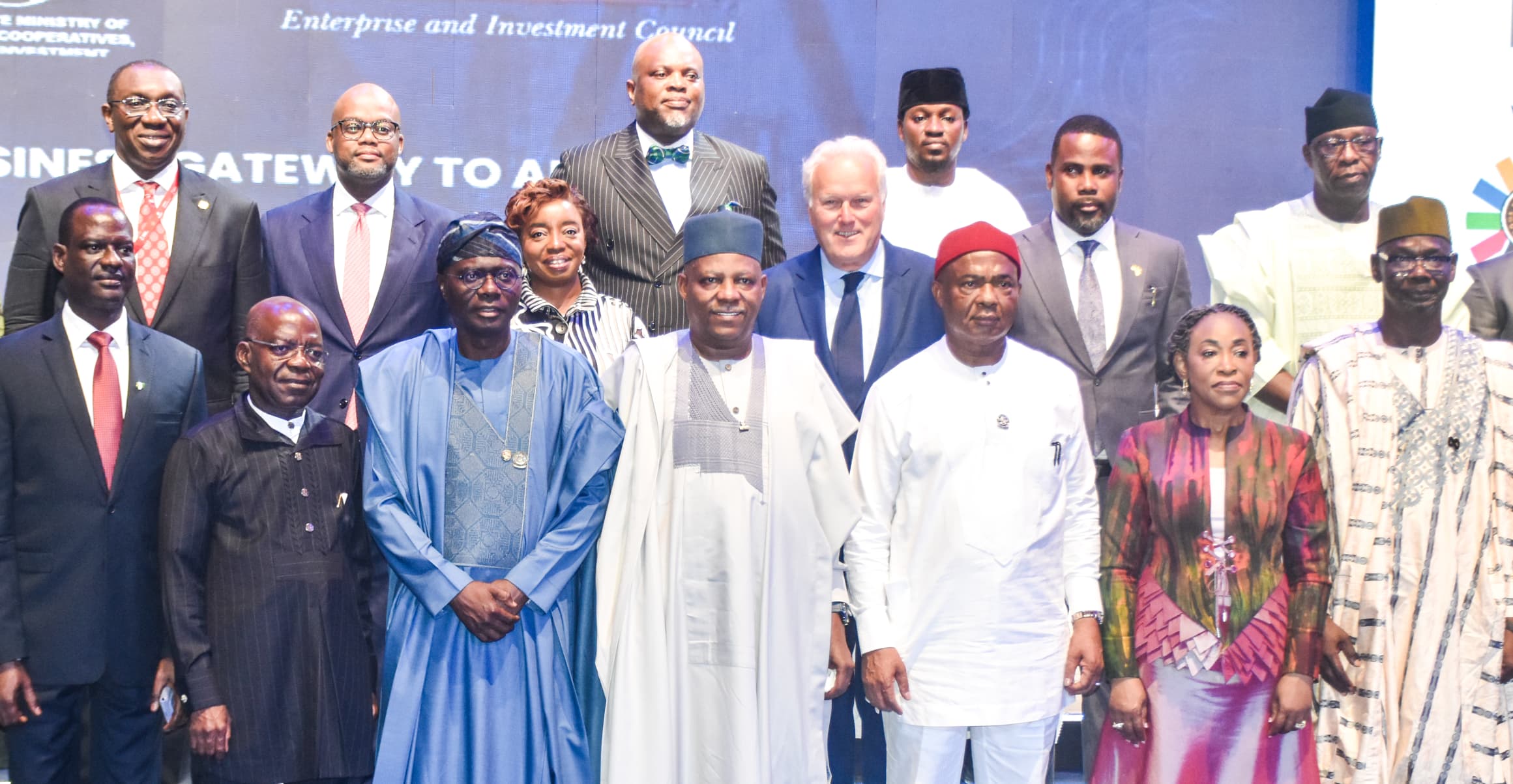
    The disclosure was made at the Invest Lagos 3.0 Summit held in Lagos, where government officials, investors, development finance institutions, and business leaders explored opportunities for economic growth under the African Continental Free Trade Area (AfCFTA).

    Speaking at the summit, the Executive Vice-President of Afreximbank, Kanayo Awani, said the bank remains committed to supporting investments that drive industrialisation and economic transformation across the continent.

    Awani, who was represented by Dr Gainmore Zanamwe, Director of Trade Facilitation and Investment Promotion at Afreximbank, said Lagos has emerged as a strategic gateway to African markets.

    According to her, the bank’s decision to support initiatives aimed at expanding trade and investment opportunities in Lagos was straightforward given the state’s economic importance.

    “We did not need to think twice,” she said.

    Awani noted that Afreximbank has invested heavily in industrial parks and special economic zones across Africa to reduce barriers to investment through the provision of critical infrastructure, including roads, power, and transport networks.

    She cited projects in Benin Republic and Gabon as examples of how targeted industrial investments can boost local value addition, stimulate manufacturing, and create employment opportunities.

    “Lagos is in that position of a gateway to Africa,” she said.

    The Afreximbank executive also highlighted the bank’s support for the Dangote Refinery project, describing it as a demonstration of the transformative impact of investment-led industrial development.

    A major highlight of the summit was the announcement that Lagos will host the next Intra-African Trade Fair (IATF), one of the continent’s largest trade and investment events.

    The Secretary-General of AfCFTA, Wamkele Mene, described Lagos as a critical centre for commerce and industrialisation on the continent.

    “Lagos is indeed the gateway to the African market,” Mene said.

    He disclosed that 50 African countries are currently implementing the AfCFTA framework, while intra-African trade has grown to approximately $230 billion.

    According to him, Nigeria now exports more goods to African markets than to any other region of the world, reflecting the growing benefits of continental economic integration.

    Mene said the forthcoming trade fair is expected to attract major investment commitments and commercial transactions from across Africa and beyond.

    Also speaking at the summit, Commonwealth Secretary-General Shirley Botchwey said global investors increasingly prioritise markets that offer stability, talent, trust, and long-term growth prospects.

    “That is why Lagos matters,” she said.

    Botchwey described Lagos as a commercial powerhouse, logistics hub, and cultural centre that exemplifies Africa’s economic potential.

    She urged governments and businesses to convert emerging opportunities into jobs, infrastructure development, innovation, and inclusive economic growth.

    “Lagos is not simply a city of potential. It is a city of proof,” she added.

    Meanwhile, the Minister of Aviation and Aerospace Development, Festus Keyamo, said Lagos remains Nigeria’s foremost aviation gateway, accounting for about 67 per cent of international passenger traffic into the country.

    According to him, the state’s strategic location positions it as a natural aviation hub connecting Africa with Europe, the Middle East, and South America.

    Keyamo disclosed that the Federal Government is investing $500 million in the modernisation of the Murtala Muhammed International Airport, Lagos.

    He also revealed plans to extend a rail line to the airport in collaboration with the Lagos State Government to improve connectivity and ease passenger movement.

    “Lagos is just ready for the next big step,” the minister said.

    Stakeholders at the summit agreed that Lagos remains central to Nigeria’s economic future and is well-positioned to deepen regional trade, attract global capital, and strengthen its role as one of Africa’s leading business and investment destinations.

  • Bahamas seeks deeper Africa-Caribbean trade ties at Afreximbank roadshow

    Bahamas seeks deeper Africa-Caribbean trade ties at Afreximbank roadshow

    NASSAU, Bahamas (NPA) — The Prime Minister of The Bahamas, Philip Davis, has highlighted the growing partnership between Africa and the Caribbean, describing it as a strategic alliance built on trade, investment, entrepreneurship and sustainable economic development.

    Davis made the remarks at the Afreximbank Bahamas Roadshow 2026, where he underscored the importance of strengthening economic ties between The Bahamas and African nations.

    According to the Prime Minister, the relationship has continued to gain momentum since the signing of a Memorandum of Understanding between The Bahamas and the African Export-Import Bank (Afreximbank) in 2023.

    He acknowledged the bank’s support for several development initiatives in the country, including infrastructure financing and a US$30 million facility provided through the Bahamas Development Bank to expand access to capital for small and medium-sized enterprises.

    Davis said the partnership is creating new opportunities for businesses, investors and entrepreneurs while supporting economic growth and job creation.

    The Prime Minister also highlighted plans for the proposed Afro-Caribbean Marketplace and Logistics Centre in Grand Bahama, describing it as a transformative project that could significantly enhance trade and investment flows between Africa and the Caribbean.

    According to him, the initiative is expected to serve as a commercial hub, facilitating stronger business linkages and opening new markets for goods and services across both regions.

    He noted that closer collaboration between Africa and the Caribbean would help unlock shared economic opportunities and strengthen cultural and historical ties between the two regions.

    The Afreximbank Bahamas Roadshow forms part of broader efforts by the bank to deepen its engagement across the Caribbean and advance the Global Africa agenda.

    Stakeholders at the event emphasised the importance of building stronger economic partnerships capable of driving sustainable development, expanding trade and fostering greater private sector participation.

    As Afreximbank continues to broaden its footprint in the Caribbean, the roadshow is expected to further strengthen cooperation between African and Caribbean economies while creating new pathways for investment and shared prosperity on both sides of the Atlantic.