Category: Innovation & Technology

  • JUST IN: FG launches Nigeria’s first manufacturing technology innovation hub at Michael Okpara University

    JUST IN: FG launches Nigeria’s first manufacturing technology innovation hub at Michael Okpara University

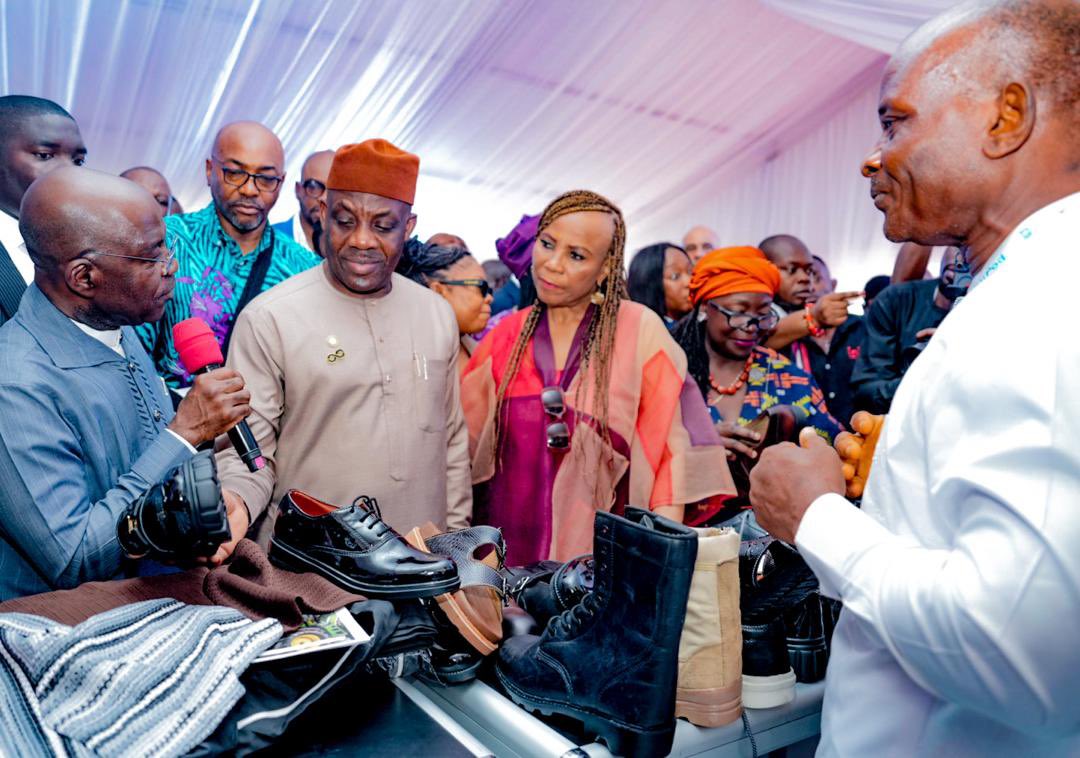
    UMUDIKE, Nigeria (NPA) — The Federal Government has inaugurated Nigeria’s first Manufacturing Technology University Innovation Pod (Manu-Tech UniPod) at Michael Okpara University of Agriculture, Umudike, through a partnership involving the United Nations Development Programme (UNDP), the Tertiary Education Trust Fund (TETFund) and the Abia State Government.

    Representing Vice President Kashim Shettima at the inauguration, the Minister of Education, Dr Maruf Tunji Alausa, said the facility reflects the Federal Government’s commitment to transforming universities into centres for innovation, entrepreneurship, research commercialisation and job creation.

    According to the minister, Nigerian universities must evolve beyond their traditional teaching and research roles to become drivers of enterprise development, technology transfer and industrial competitiveness.

    He said the initiative aligns with President Bola Tinubu’s vision of building a $1 trillion economy by 2030 through innovation, industrialisation and human capital development.

    Abia State Governor, Dr Alex Otti, described the siting of the Manu-Tech UniPod in the state as a demonstration of confidence in Abia’s growing potential as a manufacturing and industrial hub.

    United Nations Assistant Secretary-General and Director of the UNDP Regional Bureau for Africa, Ms Ahunna Eziakonwa, and the UNDP Resident Representative in Nigeria, Ms Elsie Attafuah, described the project as a catalyst for youth innovation, entrepreneurship and sustainable economic development.

    The Vice-Chancellor of Michael Okpara University of Agriculture, Umudike, Prof. Ursula Akanwa, said the innovation hub represents a landmark achievement that will strengthen the university’s role in science, technology, manufacturing and enterprise development while promoting innovation and sustainable economic growth.

  • Tinubu orders FCCPC probe of big tech, AI platforms over alleged unfair practices against Nigerian media

    Tinubu orders FCCPC probe of big tech, AI platforms over alleged unfair practices against Nigerian media

    ABUJA, Nigeria (NPA) — President Bola Tinubu has directed the Federal Competition and Consumer Protection Commission (FCCPC) to investigate major technology companies and Generative Artificial Intelligence (AI) platforms over allegations of anti-competitive practices and the unlawful use of news content belonging to Nigerian media organisations.

    The directive follows a joint petition submitted to the Presidency by the Nigerian Press Organisation (NPO), comprising the Newspaper Proprietors’ Association of Nigeria (NPAN), the Nigeria Union of Journalists (NUJ), the Broadcasting Organisations of Nigeria (BON), and the Guild of Corporate Online Publishers (GOCOP).

    FCCPC, in a statement issued by Ondaje Ijagwu, Director, Corporate Affairs, said the Federal Government’s directive was conveyed to the FCCPC in a letter signed by the Minister of Information and National Orientation, Mohammed Idris.

    According to the petition, major technology companies, including Meta, Alphabet, X (formerly Twitter), and several Generative AI platforms, are alleged to have engaged in practices that undermine fair competition, threaten the commercial sustainability of Nigerian media organisations and infringe the rights of content creators and publishers.

    Reacting to the directive, the Executive Vice Chairman and Chief Executive Officer of the FCCPC, Mr Tunji Bello, said the commission would conduct an independent, transparent and evidence-based investigation.

    “We recognise the strategic importance of the media to Nigeria’s democracy and the equally significant role of technology in driving innovation and economic growth. Our responsibility is to objectively determine the facts and ensure that competition within the digital ecosystem remains fair, transparent and consistent with Nigerian law,” Bello said.

    He stressed that the investigation should not be interpreted as a presumption of wrongdoing against any company.

    “This inquiry is not directed at any entity by presumption of wrongdoing. Rather, it is an opportunity to carefully examine the facts, hear from all affected parties and determine whether any conduct has resulted in anti-competitive outcomes or unfair business practices,” he added.

    The FCCPC said the investigation would determine whether the alleged practices violate the Federal Competition and Consumer Protection Act (FCCPA) 2018 or any other applicable law.

    The commission said the inquiry would examine allegations of market dominance, anti-competitive conduct, the unauthorised scraping and commercial use of copyrighted Nigerian news content to train Generative AI models, and claims that technology companies have failed to provide fair commercial compensation to local media organisations.

    The FCCPC noted that it had previously investigated Meta and, in 2025, secured a landmark judgment that imposed a $220 million fine on the company over alleged violations of the FCCPA, including data privacy breaches. The decision remains under appeal.

    The commission also cited South Africa, where following an investigation by the South African Competition Commission, Google agreed to compensate the country’s news media with 688 million rand (about $40 million) annually for between three and five years.

  • Google’s open-source AI Gemma 4 surpasses 200 million downloads in 2.5 months

    Google’s open-source AI Gemma 4 surpasses 200 million downloads in 2.5 months

    MOUNTAIN VIEW, California (NPA) — Google DeepMind has announced that its Gemma 4 family of open artificial intelligence models has surpassed 200 million downloads just two and a half months after launch, highlighting growing adoption by developers, researchers and startups worldwide.

    The milestone was announced on Thursday by Olivier Lacombe, Google DeepMind’s Product Director and lead for Gemma and Gemini on-device, who described the achievement as a major endorsement of the company’s open AI strategy.

    “Gemma 4 just hit 200 million downloads in only 2.5 months,” Lacombe said.

    He noted that total downloads across the entire Gemma family stood at 100 million when Gemma 3 was launched, indicating a sharp acceleration in adoption following the release of Gemma 4.

    “The community’s acceleration is incredible. Thank you to everyone building with Gemma,” he added.

    Reflecting on the milestone, Lacombe said Google DeepMind created Gemma to make the research behind its Gemini models more accessible to the global open-source community.

    “When we built Gemma, our goal was to bring Google’s Gemini research to the open-science community in an accessible and highly capable package. Seeing this milestone today is both humbling and exhilarating,” he said.

    According to him, developers are deploying Gemma in a wide range of real-world applications, from lightweight AI agents to satellite-based technologies.

    Lacombe reaffirmed Google DeepMind’s commitment to open science and developer choice, describing Gemma 4 as another step in expanding access to advanced AI technologies.

    “At Google DeepMind, our commitment to open science and developer choice remains unwavering. Gemma 4 is just one step in this journey, and we are excited to keep iterating alongside you,” he said.

    He thanked developers, researchers and organisations that have downloaded, fine-tuned and built applications using the models, promising more innovations in the future.

    Gemma is Google’s family of lightweight, open AI models developed by Google DeepMind and built on the technology that powers its Gemini artificial intelligence platform.

  • Mbah hails Enugu DNA Forensics Centre as Africa’s first, boost for justice

    Mbah hails Enugu DNA Forensics Centre as Africa’s first, boost for justice

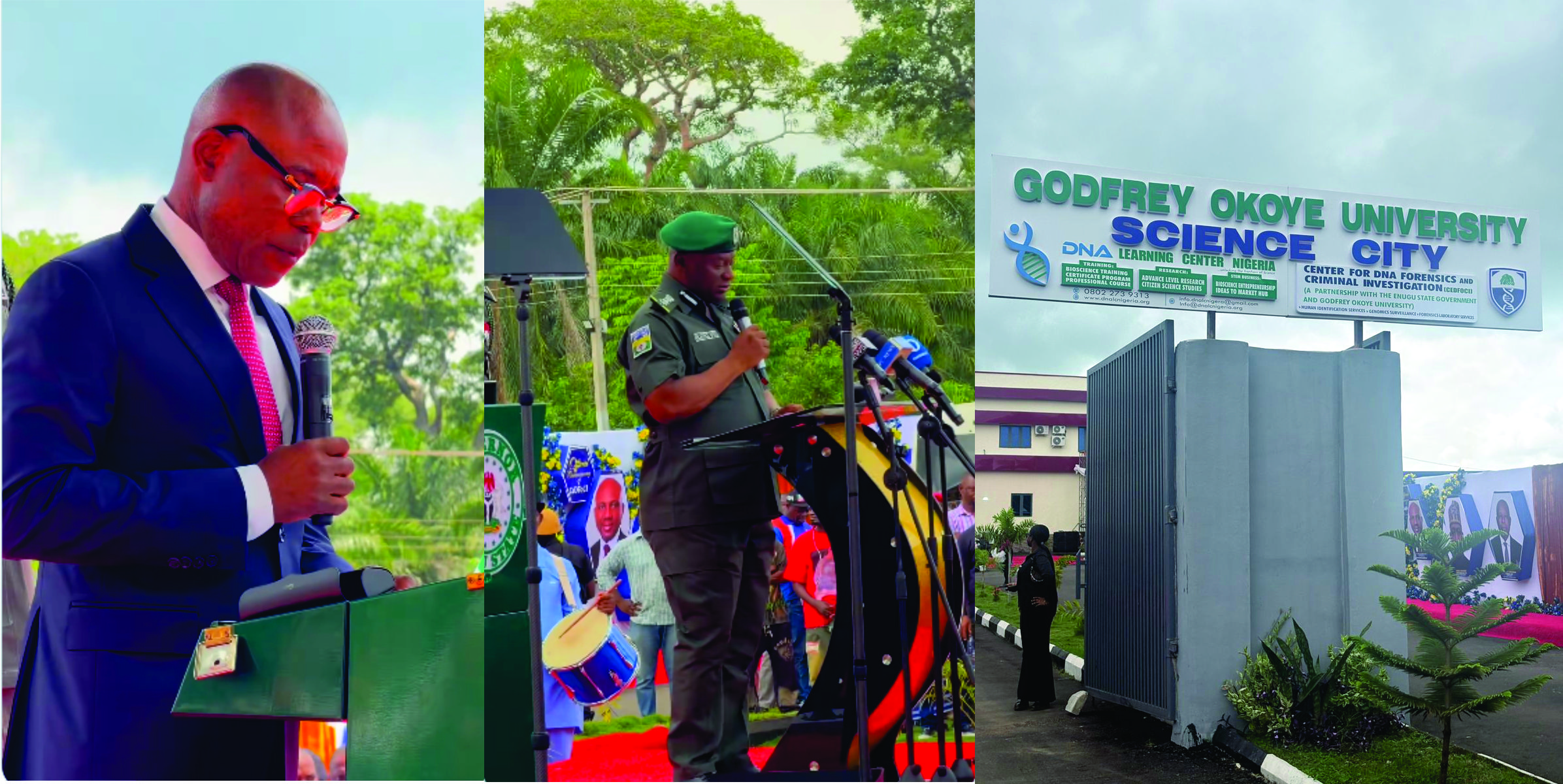
    ENUGU, Nigeria (NPA) — Enugu State Governor Peter Mbah has described the newly inaugurated Centre for DNA Forensics and Criminal Investigation (CeDFoCI) as the first facility of its kind in Africa, saying it represents a major investment in justice administration, public safety and scientific innovation.

    In a statement on Wednesday, Mbah said the centre would strengthen criminal investigations, improve prosecution, support scientific research and help build a safer society.

    “The safety of our people and the future of our society depend not only on infrastructure, but also on strong institutions, innovation and knowledge,” the governor said.

    “The commissioning of the Centre for DNA Forensics and Criminal Investigation, the first of its kind in Africa, is a major step in that direction.”

    According to him, the facility will enhance the use of modern forensic science in combating crime while providing advanced training for future forensic experts.

    “It is an investment in justice, security and the kind of future we are building for generations to come,” he added.

    The Centre for DNA Forensics and Criminal Investigation is located at Godfrey Okoye University, Ugwuomu, Nike, Enugu.

    The facility was established through a partnership involving the Enugu State Government, Godfrey Okoye University and the Nigeria DNA Learning Centre.

    The centre is designed to provide scientific evidence for criminal investigations, support law enforcement agencies and strengthen Nigeria’s justice system through forensic DNA analysis.

    Its services include crime scene analysis involving fingerprints, footprints, blood, hair and other biological evidence, while also serving as a training and research hub for forensic scientists, medical professionals and students.

    Although located in Enugu, the facility is expected to serve law enforcement agencies and institutions across Nigeria.

    Mbah described the project as one of the most significant investments in the state’s security architecture, noting that it would leave criminals with fewer places to hide.

    The Attorney-General of the Federation and the Inspector-General of Police also hailed the facility as a landmark initiative that would accelerate the integration of forensic science into Nigeria’s criminal justice system.

    Reaffirming his administration’s development agenda, Mbah said every policy and project undertaken by his government was aimed at building a prosperous and globally competitive Enugu State.

    “Brick by brick, we are building the Enugu we will be proud to live in and proud to show the world,” he said.

  • INEC under data protection scrutiny, says NDPC

    INEC under data protection scrutiny, says NDPC

    ABUJA, Nigeria (NPA) — The Nigeria Data Protection Commission (NDPC) has disclosed that it twice requested the Records of Processing Activities (ROPA) of the Independent National Electoral Commission (INEC) over allegations of data breaches.

    The National Commissioner of the NDPC, Dr Vincent Olatunji, made the disclosure during a media briefing in Abuja to mark the commission’s third anniversary.

    Olatunji said the requests were made following the enactment of the Nigeria Data Protection Act by President Bola Ahmed Tinubu on June 12, 2023, as part of efforts to safeguard the integrity of Nigeria’s electoral database.

    According to him, the commission treats all reported data breaches with urgency and professionalism, irrespective of whether the institutions involved are public or private.

    “There is no breach reported to us that we have not acted on, whether in government or private institutions,” he said.

    “For instance, INEC has been asked twice for its Records of Processing Activities. The matter is sensitive because the country is moving towards another election and it speaks to the credibility of the database.”

    He stressed that the commission was acting promptly because of the importance of maintaining public confidence in the electoral process.

    The NDPC boss also revealed that the commission had investigated several organisations, including Meta, TikTok, Temu, Remita and Sterling Bank, insisting that no organisation was exempt from scrutiny.

    According to him, all organisations invited by the commission had cooperated fully with investigations.

    “I cannot remember any organisation that was invited and did not show up. All of them have appeared and engaged with us,” he said.

    Olatunji explained that the NDPC adopts a compliance-driven and developmental approach to regulation rather than focusing solely on sanctions.

    He said the commission evaluates organisations based on factors such as registration status, audit filings, data protection officers, privacy policies and technical safeguards before determining appropriate corrective measures.

    According to him, organisations with substantial compliance records are often directed to address identified gaps within a specified period and may be required to pay remediation fees instead of penalties.

    “The objective is compliance and not punishment. We do not want to stifle innovation or drive away investors,” he said.

    “Our law is a developmental law designed to stimulate sustainable growth.”

    Olatunji further disclosed that the commission’s dispute with Meta was the only case that proceeded to court after the company challenged a $32 million penalty imposed by the NDPC.

    He said the matter was eventually resolved through an out-of-court settlement after both parties agreed on measures to strengthen compliance and support data protection initiatives in Nigeria.

    According to him, the settlement was reached in the interest of the economy and millions of Nigerians who rely on Meta’s platforms for business and communication.

    “What we desire is compliance, not embarrassment or driving companies or investors away from Nigeria,” he said.

    “The agreement reached is a win-win situation that protects Nigerians and ensures responsible handling of personal data.”

    The NDPC commissioner reaffirmed the commission’s commitment to integrity, transparency and stakeholder collaboration in advancing data protection and privacy awareness across the country.

  • Nigeria launches digital switch-over, marks milestone in broadcasting transformation

    Nigeria launches digital switch-over, marks milestone in broadcasting transformation

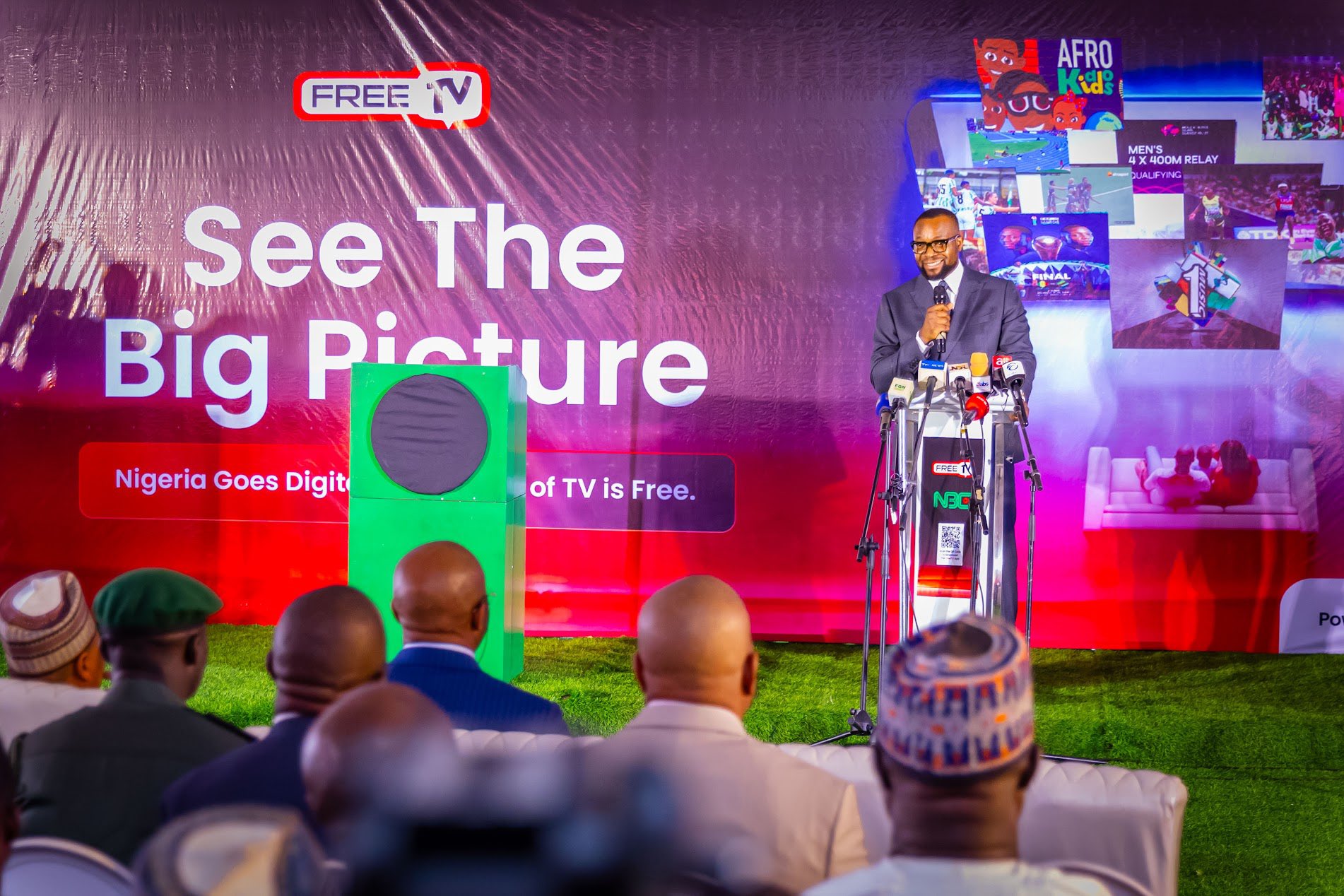
    ABUJA, Nigeria (NPA) — Minister of Communications, Innovation and Digital Economy, Dr. ’Bosun Tijani, has announced the official launch of Nigeria’s Digital Switch Over (DSO), describing it as the fulfilment of a longstanding national aspiration to transition broadcasting from analogue to digital.

    Speaking earlier today, Tijani said the DSO represents a major milestone in Nigeria’s broader digital transformation agenda and underscores President Bola Ahmed Tinubu’s commitment to investing in foundational infrastructure that will drive growth and prosperity for decades to come.

    “The Digital Switch Over is not just about television. By leveraging NigComSat’s satellite infrastructure, Nigerians will enjoy clearer access to information, richer educational and cultural content, improved quality of service, and greater inclusion — ensuring that no one is left behind simply because of where they live,” Tijani stated.

    He explained that the DSO is one of the first visible benefits of a larger national digital infrastructure strategy. Under this administration, Nigeria is embarking on the deployment of 90,000 kilometres of open‑access fibre through Project BRIDGE, connecting communities, businesses, institutions, and public services nationwide. In addition, President Tinubu has approved investments in two new satellites to further strengthen Nigeria’s communications and digital service capacity.

    Together, these initiatives will create a transformative digital backbone capable of reaching every Nigerian, regardless of geography. As the infrastructure expands, it will unlock unprecedented opportunities for broadcasters, content creators, entrepreneurs, and innovators to reach audiences across West Africa and beyond.

    “Infrastructure does not merely move signals; it amplifies culture, ideas, and influence,” Tijani emphasised, noting that the DSO marks Nigeria’s decisive step toward a more connected, inclusive, and prosperous future.

  • Google unveils Android 17 with new productivity, gaming and security features

    Google unveils Android 17 with new productivity, gaming and security features

    GOOGLEPLEX, California (NPA) — Google has announced the release of Android 17, describing it as a major update packed with new features designed to enhance productivity, entertainment, and security. The rollout begins today for Pixel devices, with other eligible Android phones set to receive the update throughout 2026.

    According to Seang Chau, VP and GM of Android Platform, “Android 17 is here, bringing a suite of features designed to enhance your productivity, entertainment, security and safety.” He added that select advanced devices will gain Gemini Intelligence later this summer, offering proactive assistance to help users manage daily tasks.

    Among the standout features is Bubbles multitasking, which allows any app to be converted into a floating window for quick access. On large‑screen devices, bubbles dock in a dedicated bar, enabling seamless switching and resizing.

    Another highlight is Screen Reactions, a tool that lets users record themselves with the selfie camera while capturing their phone screen, making it easier to share reactions over apps, sites, and trending videos without complex setups.

    For gamers, Android 17 introduces Foldable Gaming Mode, offering a split layout with gameplay on top and a dynamic gamepad below. The update also improves memory cleanup to reduce frame drops and stutters during high‑definition gaming.

    Security has been strengthened with features such as temporary location sharing, selective contact access, and an enhanced “Mark as Lost” option in Find Hub, which locks missing phones with biometrics. Updates to Live Threat Detection and Advanced Protection Mode further guard against suspicious apps and sophisticated threats.

    Additional improvements include expanded parental controls, a dedicated assistant volume control, more customisation for dark mode, and app memory limits to boost performance and battery life. Pixel devices also receive exclusive updates through the June Pixel Drop, including real‑time screen reactions, Gemini Omni creative tools, and expanded safety features like Car Crash Detection and Loss of Pulse Detection.

    With Android 17, Google positions its platform as more powerful, secure, and creative, aiming to meet the demands of an AI‑driven mobile era.

  • 1Password acquires Israeli cyber startup Apono in landmark $250M–$300M deal

    1Password acquires Israeli cyber startup Apono in landmark $250M–$300M deal

    TEL AVIV, Isreal (NPA) Canadian cybersecurity giant 1Password has acquired Israeli startup Apono in a deal valued between $250 million and $300 million, marking its first acquisition in Israel and a significant expansion beyond password management into access governance.

    Apono, founded in 2022 by Rom Carmel and Ofir Stein, operates an AI‑powered platform that manages permissions and access to cloud infrastructure. The company eliminates standing permissions by providing dynamic, real‑time access based on business needs and context. Its technology is designed to address the growing challenge of securing both human and non‑human digital identities in the AI era.

    All 80 of Apono’s employees, including 50 based in Israel, will join 1Password, which also plans to expand its local operations with new hires. Carmel, who previously held R&D leadership roles in the Prime Minister’s Office cyber division, and Stein, a former Air Force Ofek unit officer and early developer at Logz.io, bring decades of DevOps and cybersecurity experience to the acquisition.

    Apono has raised $54 million since inception, with investors including Meron Capital, USVP, 33N Ventures, New Era Capital, and others. In December 2025, the company announced its Series B round, led by USVP and 33N Ventures. Board member Ziv Conen of New Era Capital described Apono’s vision as “securing access for AI agents,” highlighting its role in the next frontier of cybersecurity.

    The platform serves Fortune 500 companies and enterprises across the United States, Europe, and Israel, with customers such as Hewlett Packard Enterprise, Jasper, and Bloomreach. It supports access management across AWS, Azure, Google Cloud, Kubernetes, Snowflake, and Databricks, and integrates with more than 200 enterprise applications including Slack, Jira, PagerDuty, and GitHub.

    1Password, valued at approximately $6.8 billion, reported annual recurring revenue of more than $400 million at the end of 2025. The acquisition of Apono strengthens its position in identity and access security, expanding its reach into governance and compliance — areas where Israeli firms like CyberArk and Wiz are already major players.

    The deal comes as organizations worldwide adopt artificial intelligence and face a surge in non‑human digital identities. Apono’s system grants access on a just‑in‑time basis and revokes it immediately after tasks are completed, reducing the need for permanent accounts and simplifying deployment.

    By acquiring Apono, 1Password positions itself at the forefront of identity security in the AI era, combining its global scale with Israeli innovation to tackle one of cybersecurity’s most pressing challenges.

  • Sowore accuses MTN of shortchanging subscribers on data service, threatens nationwide protest

    Sowore accuses MTN of shortchanging subscribers on data service, threatens nationwide protest

    ABUJA, Nigeria (NPA) — Human rights activist and African Action Congress (AAC) presidential candidate, Omoyele Sowore, has accused telecommunications giant MTN Nigeria of shortchanging subscribers and failing to provide transparency in the management of mobile data consumption.

    Sowore’s criticism followed remarks by MTN Nigeria Chief Executive Officer, Karl Toriola, who recently stated that unlimited mobile data plans are largely unavailable globally unless customers are willing to pay significantly higher fees.

    Reacting in a statement on Monday, Sowore alleged that the telecom operator was asking Nigerians to consume less data while continuing to charge higher prices.

    “MTN’s CEO, Karl Toriola, is essentially telling Nigerians to use less of the data they paid for while continuing to charge them more. That is precisely what many consumers find unacceptable,” Sowore said.

    He argued that internet access has become an essential service in modern society and should not be treated as a luxury.

    “People buy data for work, education, business, communication, entertainment and daily life. In the digital age, data is not a luxury; it is a necessity,” he stated.

    Sowore further called for greater accountability and transparency in the telecommunications sector, insisting that consumers deserve clear information on how data is measured, priced and consumed.

    “Nigerians deserve affordable, reliable internet service, fair pricing, and complete transparency about how their data is measured, priced and consumed,” he said.

    He urged subscribers who believe they are being unfairly treated to organise and demand accountability from service providers.

    “If you believe consumers are being shortchanged, then it is time to organise, speak up and demand accountability,” he added.

    The activist also threatened a nationwide protest campaign under the hashtag #OccupyMTN, escalating his dispute with the telecommunications company.

    According to Toriola, “unlimited data on mobile networks does not exist anywhere in the world, except you are paying $400 a month.”

    He maintained that unrestricted data usage could place excessive pressure on network infrastructure and compromise service quality for subscribers.

    Sowore, however, rejected the claim, describing it as misleading and insisting that millions of consumers around the world enjoy affordable, unlimited or near-unlimited internet plans.

    The activist accused MTN executives of failing to provide accurate information about global data pricing and availability.

    MTN Nigeria has yet to issue an official response to Sowore’s latest remarks as debate over data pricing, network quality and consumer protection within Nigeria’s telecommunications sector, where mobile internet services remain critical to business, education and everyday communication, rages on.

  • DStv Nigeria announces temporary contact centre shutdown for system maintenance

    DStv Nigeria announces temporary contact centre shutdown for system maintenance

    LAGOS, Nigeria (NPA) — DStv Nigeria has announced a temporary shutdown of its customer contact centre services as part of a scheduled system maintenance exercise.

    In a notice to subscribers, the pay-TV provider said its contact centre would be unavailable from 2:00 p.m. to 8:00 p.m. on Friday, after which normal operations would resume.

    The company explained that the maintenance exercise would affect its call centre, email support and live chat services during the six-hour period.

    However, DStv assured customers that its self-service platforms would remain fully operational throughout the maintenance window.

    Subscribers can continue to access services through the MyDStv and MyGOtv mobile applications, the company’s websites and its WhatsApp service channel.

    The company said the temporary disruption is necessary to improve service delivery and enhance operational efficiency.

    DStv apologised for any inconvenience the maintenance exercise may cause and thanked customers for their understanding and continued support.

    The company advised subscribers requiring assistance during the period to utilise its available digital self-service channels until full contact centre operations resume.