

BREAKING: Nnamdi Kanu’s conviction could be overturned over self-representation, lawyer says
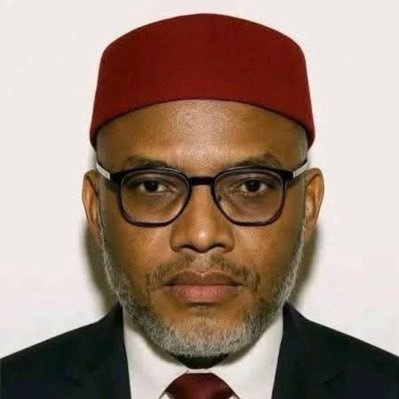
ABUJA, Nigeria (NPA) — Aloy Ejimakor, a member of the legal team representing the leader of the Indigenous People of Biafra (IPOB), Mazi Nnamdi Kanu, has argued that the Federal High Court committed a fundamental legal error by allowing Kanu to represent himself during a trial involving offences carrying severe penalties.
Ejimakor, in a statement titled “How Mazi Nnamdi Kanu’s Self-Representation Flawed His Conviction,” contended that under Nigerian law, the right to legal representation in cases involving capital offences or offences punishable by life imprisonment is a mandatory constitutional safeguard that cannot be waived by a defendant.
According to him, the issue is expected to form a major plank of Kanu’s appeal against his recent conviction.

The lawyer said that following consultations between Kanu and his legal team, led by Chief Kanu Agabi (SAN), the IPOB leader elected to personally conduct his defence during the proceedings.
He noted that the trial court accepted the decision after Kanu reportedly declined the offer of court-appointed counsel.
However, Ejimakor argued that the acceptance of that decision was inconsistent with established principles of Nigerian criminal jurisprudence.
“The central question before the Court of Appeal is whether a defendant facing charges that carry the death penalty or life imprisonment can legally waive his right to counsel. The answer, in law, is no,” he stated.
According to him, while Section 36(6)(c) of the Constitution grants accused persons the right to defend themselves either personally or through legal practitioners of their choice, that provision cannot be interpreted in isolation.
He argued that the constitutional guarantee must be read together with the broader principles of fair hearing and existing statutory provisions governing serious criminal trials.
Ejimakor specifically cited Section 267(2) of the Administration of Criminal Justice Act (ACJA), which mandates courts to appoint legal representation for any defendant charged with a capital offence or an offence punishable by life imprisonment where such a defendant is not represented by counsel.
“The operative word is ‘shall’, which imposes a mandatory duty on the court and leaves no room for discretion,” he said.
According to the lawyer, once Kanu’s legal team stepped aside, the trial judge was legally obliged to appoint another lawyer to represent him regardless of whether he consented to such representation.
He maintained that Kanu’s refusal of legal representation could not override a statutory obligation imposed on the court.
Ejimakor further cited previous Supreme Court decisions, including Josiah v. State (1985) and Ganiyu v. State (2013), which held that legal representation in capital trials is a condition precedent to the validity of such proceedings.
According to him, the apex court had consistently ruled that trials involving serious offences conducted without legal representation could be rendered a nullity.
He acknowledged that the trial court may have considered Kanu capable of conducting his own defence because of his education and articulate presentation, but argued that personal competence could not substitute for professional legal representation in a criminal trial involving complex constitutional and evidentiary issues.
“A capital trial involves intricate rules of evidence, criminal procedure, and constitutional safeguards that require professional legal expertise. Allowing a defendant to navigate such proceedings alone creates a fundamental constitutional defect,” he argued.
Ejimakor therefore urged the Court of Appeal to carefully examine the circumstances surrounding Kanu’s self-representation and determine whether the proceedings complied with constitutional and statutory requirements.
The lawyer maintained that the issue goes to the root of the trial and could have significant implications for the validity of the conviction.
Nnamdi Kanu was convicted on November 20, 2025, by Justice James Omotosho of the Federal High Court in Abuja on charges bordering on terrorism-related offences and incitement linked to his broadcasts and activities as leader of IPOB.
Biafra activist Simon Ekpa awaits Finnish Appeal Court ruling on six-year jail term tomorrow

Kano police arrest four suspects, recover three stolen vehicles

Amnesty International condemns police blocking of ‘Tinubu Must Go’ protest in Kano

SERAP sues CBN over alleged unaccounted $6.23m election funds, ₦1.63tn in other public funds

Abia police arrest 40-year-old suspect, recover fake ₦200 notes in Aba

Media Freedom Coalition demands justice 20 years after Anna Politkovskaya’s assassination

Finance Ministry Unaware of N124.86bn CBN withdrawal, witness tells court in Emefiele trial

Former US federal employee pleads guilty to $194 million government fraud scheme
- Tinubu commissions NRS Headquarters, says new tax reforms will drive prosperity
- Tinubu assures investors of regulatory stability as Ogun, DP World sign $7bn port, SEZ MoUs
- Climate change anxiety is rising — and so is the willingness to act on it
- Ohaukwu LG Chairman Ituma breaks ground for modern diagnostic centre, blood bank
- Baseball boosts TBS, NFL gives ESPN a kick and streamers love ‘Squid’
Community Discussion