

NABTEB deploys GPS monitoring technology to combat exam malpractice
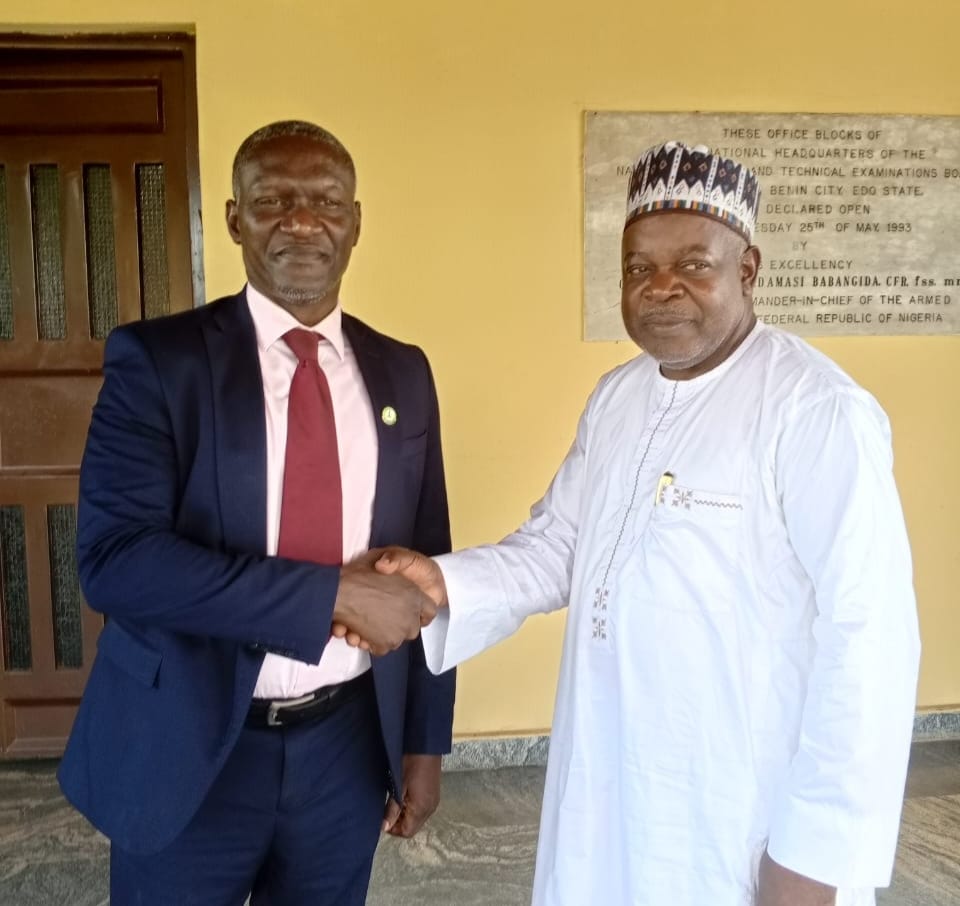
BENIN CITY, Nigeria (NPA) — The National Business and Technical Examinations Board (NABTEB) has intensified efforts to combat examination malpractice through the deployment of technology-driven monitoring systems and stronger collaboration with anti-corruption agencies.
Registrar and Chief Executive Officer of NABTEB, Dr. Aminu Mohammed, disclosed this while receiving the Edo State Resident Commissioner of the Independent Corrupt Practices and Other Related Offences Commission (ICPC), Mr Ebenezer Shogunle, at the board’s national headquarters in Benin City.
Mohammed said the board has introduced advanced monitoring mechanisms, including GPS-enabled devices, to strengthen examination integrity and improve accountability among officials deployed for examination duties nationwide.

“We are strengthening our examination monitoring architecture. Through the deployment of GPS-enabled monitoring devices, we can verify the locations of our officers during examinations and improve the credibility of our monitoring processes,” he said.
According to the NABTEB boss, the board has also introduced malpractice reporting forms for monitoring officers and is leveraging technology-based tools to enhance supervision and oversight during examinations.
He revealed that NABTEB recently thwarted an attempt to compromise an examination at a technical college through intelligence gathering and the strategic deployment of senior officials.
Mohammed described examination malpractice as a serious breach of public trust and called for stricter sanctions against offenders.
“Examination malpractice is a gross misconduct and, where necessary, offenders should be handed over to law enforcement agencies for appropriate action,” he stated.
The registrar urged the ICPC to support the board through sustained sensitisation programmes targeted at staff, examination officials, and other stakeholders on the dangers and consequences of corrupt practices.
He also highlighted ongoing efforts to strengthen institutional capacity through continuous training and professional development programmes for staff.
According to him, NABTEB conducts post-examination reviews after every major examination exercise to identify operational gaps and improve efficiency.
Mohammed disclosed that more than 20 drivers were recently trained as part of the board’s broader human capacity development initiative.
The registrar further called for stronger support for Technical and Vocational Education and Training (TVET), stressing that Nigeria’s development depends largely on practical skills acquisition and competency-based education.
“One of the campaigns we would like the ICPC to join us in promoting is skills development. As a nation, we must begin to place greater emphasis on what individuals can do rather than merely the certificates they possess,” he said.
“Skills acquisition and competency-based education are critical to national development and economic self-reliance.”
Mohammed reiterated NABTEB’s mandate in the coordination, assessment, certification, and verification of technical and business education qualifications, noting that stronger inter-agency cooperation would further enhance the board’s effectiveness.
Earlier, ICPC Resident Commissioner Ebenezer Shogunle commended the leadership of NABTEB and reaffirmed the commission’s commitment to partnering with the board in promoting transparency, accountability, and ethical conduct.
“We are here to build institutional synergy and reaffirm our joint responsibility in promoting integrity and accountability. This visit is an opportunity to strengthen our partnership with NABTEB, particularly in areas relating to examination integrity and ethical conduct,” Shogunle said.
He noted that examination integrity remains a critical component of educational development and professional standards, adding that public institutions must continue to strengthen systems that promote transparency and public trust.
Shogunle assured NABTEB of the commission’s continued support in anti-corruption sensitisation, capacity building, and institutional strengthening.
The visit underscored growing collaboration between both agencies as part of efforts to safeguard the credibility of Nigeria’s educational assessment system and promote accountability in public institutions.

LASTMA urges Lagos drivers to prioritise children’s safety as schools reopen

Mbah honoured with honorary Doctor of Laws by UEL as Otti celebrates Enugu governor
Nigeria’s Education Minister of State joins UNESCO roundtable on AI in education

BREAKING: FG automates academic certificate verification, eliminates physical visits to Education Ministry

JUST IN: NYSC announces physical verification for foreign-trained graduates for 2026 Batch ‘C’ Stream I
JAMB, WAEC introduce ₦4,000 O’Level verification, partner Dangote Foundation
NYSC DG tasks procurement officers on continuous capacity building

Atiku welcomes suspension of WAEC, NECO fee hike, criticises Tinubu’s policy approach
- Tinubu commissions NRS Headquarters, says new tax reforms will drive prosperity
- Netanyahu says security forces hunt gunman after deadly West Bank attack
- Climate change anxiety is rising — and so is the willingness to act on it
- Golden Globes want to make a comeback this year. Hollywood isn’t buying
- Baseball boosts TBS, NFL gives ESPN a kick and streamers love ‘Squid’
Community Discussion