

Umahi urges accountability in public spending, commends Tinubu's anti-corruption agenda
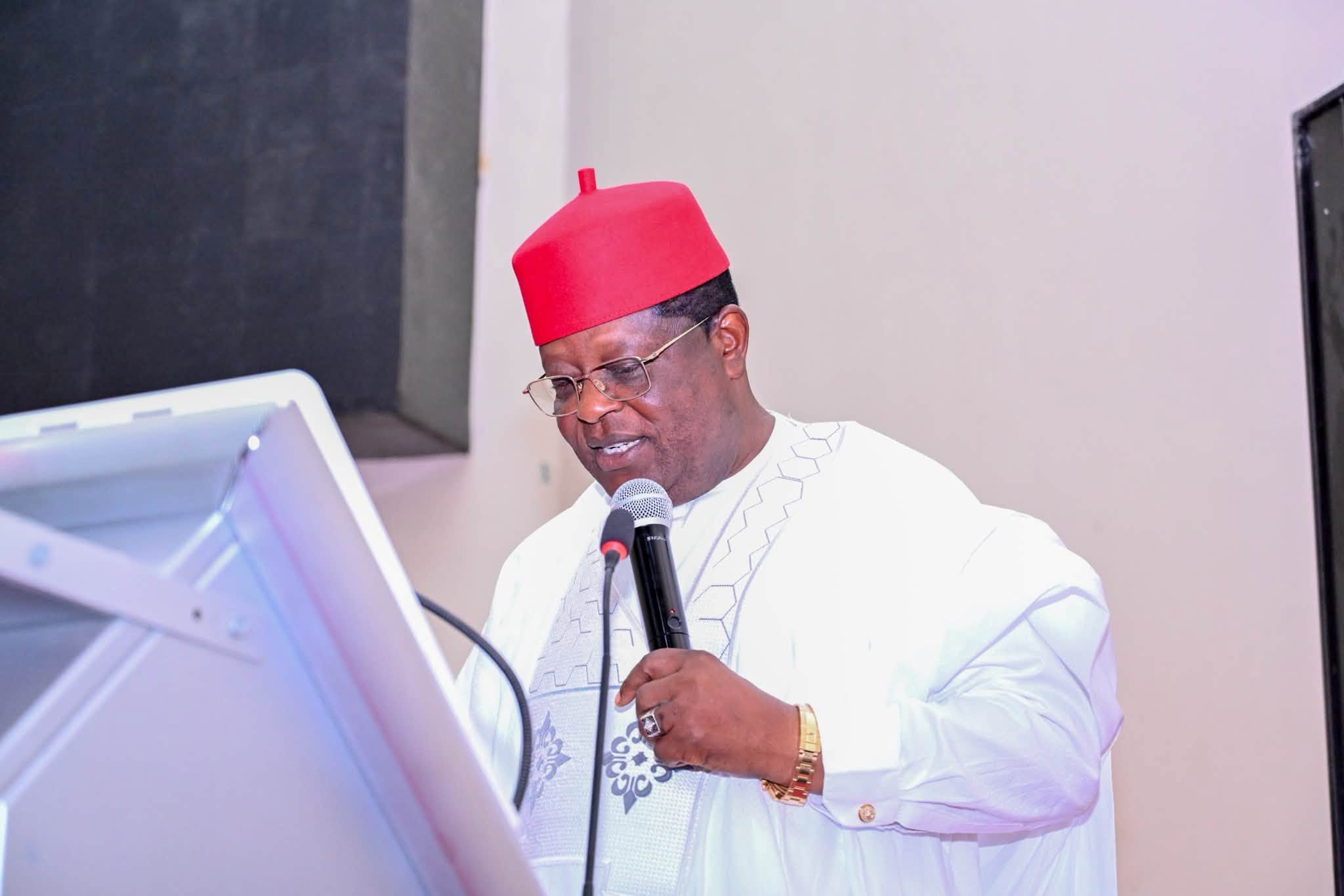
ABUJA, Nigeria (NPA) — Minister of Works, Senator David Umahi, has called for greater transparency and accountability in the management of public resources, insisting that every naira belonging to Nigerians must be used solely for their benefit.
Umahi made the call on Thursday while delivering the keynote address at the launch of the Joint Tracking Report, organised by the Independent Corrupt Practices and Other Related Offences Commission (ICPC) in collaboration with the Federal Ministry of Works.
The event, held at the ICPC headquarters in Abuja, brought together lawmakers, anti-corruption agencies, senior government officials and other stakeholders to discuss the theme, “The Role of Parliamentarians in the Fight Against Corruption.”

Speaking against the backdrop of ongoing efforts to strengthen accountability in public service, the minister described corruption as one of the greatest obstacles to Nigeria’s development, saying it must be confronted through ethical leadership, institutional reforms and collective action.
Drawing on his experience as a former governor, senator and now a cabinet minister, Umahi said public office demands integrity, responsible leadership and prudent management of national resources.
“As one privileged to have served in both the Executive and the Legislature, and now as the Honourable Minister of Works under the leadership of President Bola Ahmed Tinubu, I have witnessed firsthand the importance of ethical leadership, effective legislative oversight and responsible governance,” he said.
According to the minister, the Tinubu administration remains committed to ensuring that public funds are managed with discipline and deployed to improve the lives of Nigerians.
He argued that corruption extends beyond the diversion of government funds, warning that it weakens institutions, erodes public confidence and undermines national development.
“Corruption is not merely the misappropriation of public resources. It is an assault on development, justice, equity and the confidence of citizens in government,” Umahi said.
He noted that corrupt practices deprive citizens of essential infrastructure and public services by diverting resources intended for roads, healthcare, education, agriculture and social welfare.
According to him, prudent financial management remains indispensable to achieving sustainable economic growth and improving the quality of life of Nigerians.
Focusing on the role of the National Assembly, Umahi described lawmakers as critical partners in the country’s anti-corruption campaign because of their constitutional responsibilities in lawmaking, oversight and representation.
He urged parliamentarians to strengthen Nigeria’s legal framework by reviewing existing laws, closing loopholes that encourage corruption and enacting legislation that promotes transparency, accountability, procurement reforms and fiscal responsibility.
The minister also stressed that legislative oversight should be exercised constructively to ensure public resources are properly utilised rather than becoming a source of unnecessary conflict between arms of government.
“Parliamentarians’ oversight function should never be reduced to confrontation; rather, it should be a constitutional mechanism for ensuring that public funds are utilised efficiently, lawfully and for their intended purposes,” he said.
Reflecting on his tenure as Governor of Ebonyi State, Umahi attributed the state’s infrastructure expansion to prudent financial management, strict monitoring of projects and direct supervision of government programmes.
He said ensuring value for money in public projects remains a guiding principle of his approach to governance.
The minister maintained that defeating corruption requires the active participation of all sectors of society and should not be left solely to anti-corruption agencies or government institutions.
He called for stronger collaboration among the Executive, Legislature, Judiciary, anti-corruption agencies, civil society organisations, the media, professional bodies, religious institutions and citizens to build a culture where integrity is rewarded and corruption is rejected.
Umahi further argued that Nigeria’s anti-corruption campaign must be institutionalised to outlive individual administrations.
“The fight against corruption is not a one-time campaign; it is a continuous national commitment. Every generation has the responsibility to leave behind stronger institutions than it inherited,” he said.
Concluding his address, the minister said the campaign against corruption ultimately seeks to promote justice, national development and a better future for generations to come.
“The fight against corruption is ultimately a fight for justice, development, national unity and the future of our children,” he added.
Among those in attendance were Chairman of the Senate Committee on Anti-Corruption and Financial Crimes, Senator Emmanuel Udende; Chairman of the House Committee on Anti-Corruption, Kayode Moshood Akiolu; Chairman of the Code of Conduct Bureau, Dr Abdullahi Usman Bello; Chairman of the Economic and Financial Crimes Commission (EFCC), Ola Olukoyede; Director-General of the Nigeria Financial Intelligence Unit (NFIU), Hafsat Abubakar Bakari; Director-General of the Bureau of Public Procurement (BPP), Dr Adebowale Adedokun, as well as senators, members of the House of Representatives and other stakeholders.


2027: Tinubu clearing your mess, Keyamo knocks Atiku Abubakar

Biafra activist Simon Ekpa awaits Finnish Appeal Court ruling on six-year jail term tomorrow
2027: APC slams Atiku over addressing Tinubu by first name, vows to maintain protocol

JUST IN: INEC defends AI use ahead of 2027 elections, promises safeguards

Obidient Movement warns Wike against alleged 2027 election rigging plans

Peter Obi faults Tinubu’s one-month petrol discount, calls policy ‘reactive and confused’

Adelabu did not ask Nigerians to reject APC, media office says viral report is false
NRM presidential candidate Esther Okereke promises grassroots development
- Tinubu commissions NRS Headquarters, says new tax reforms will drive prosperity
- Tinubu assures investors of regulatory stability as Ogun, DP World sign $7bn port, SEZ MoUs
- Climate change anxiety is rising — and so is the willingness to act on it
- Ohaukwu LG Chairman Ituma breaks ground for modern diagnostic centre, blood bank
- Baseball boosts TBS, NFL gives ESPN a kick and streamers love ‘Squid’
Community Discussion